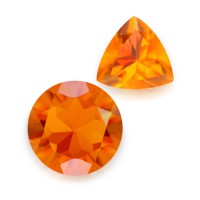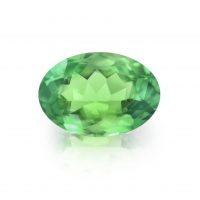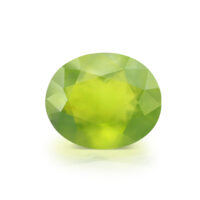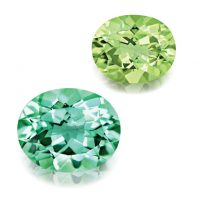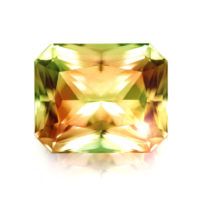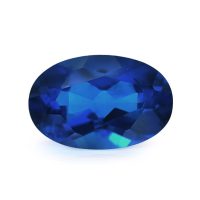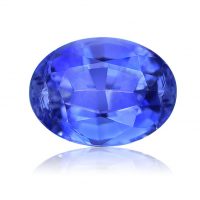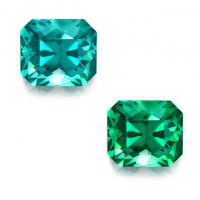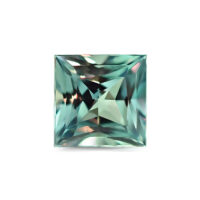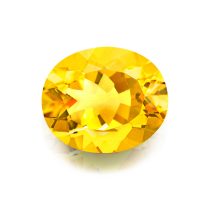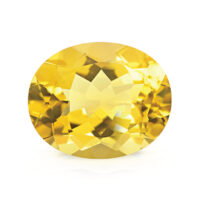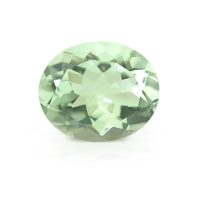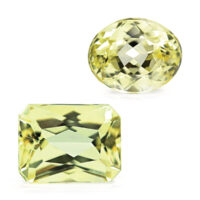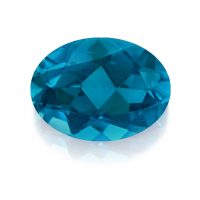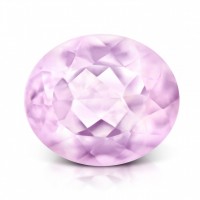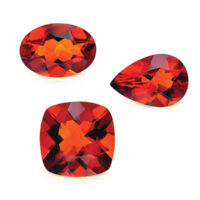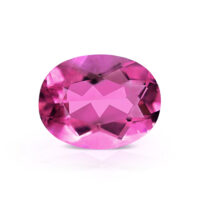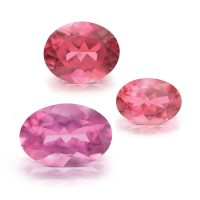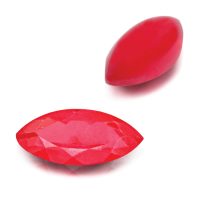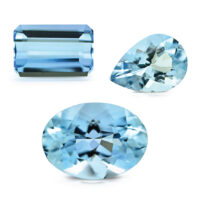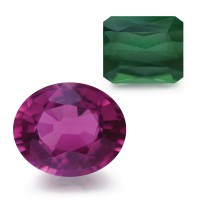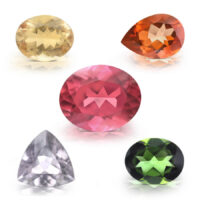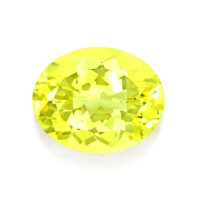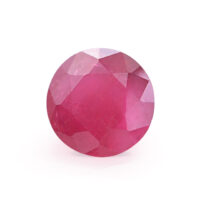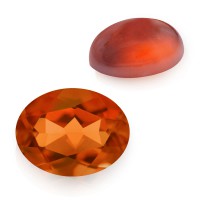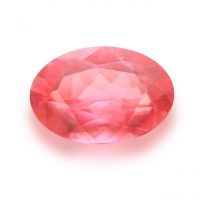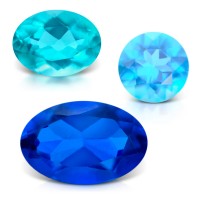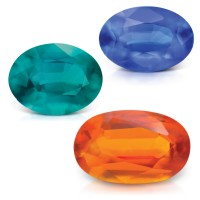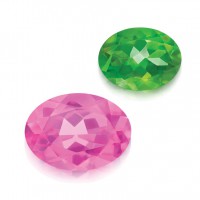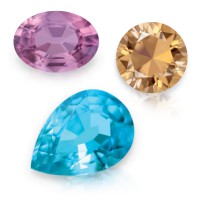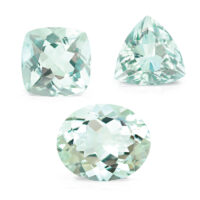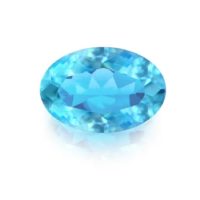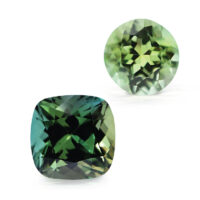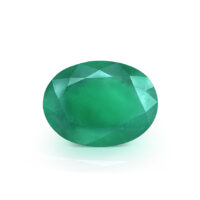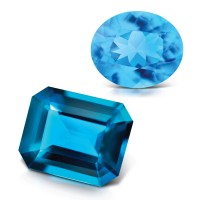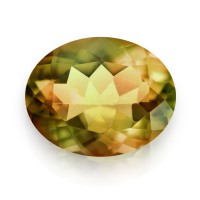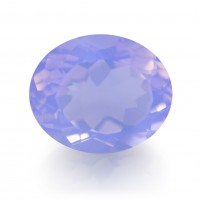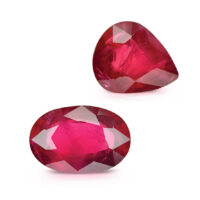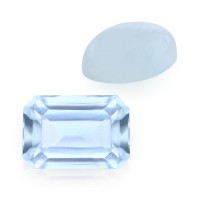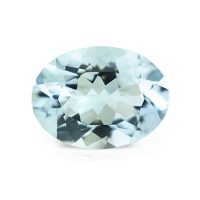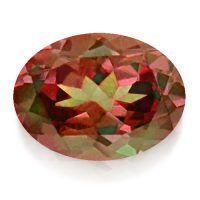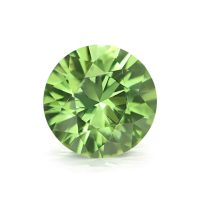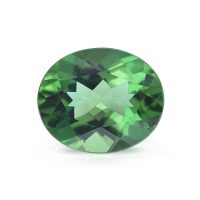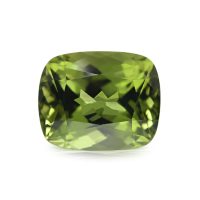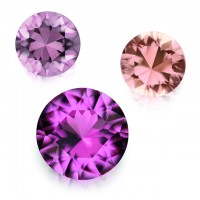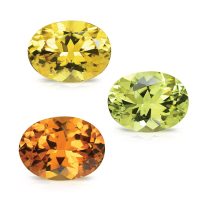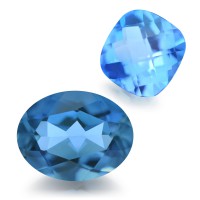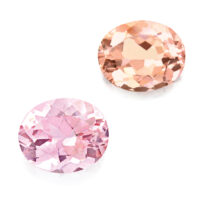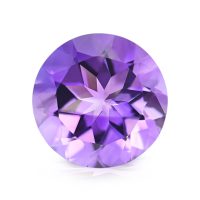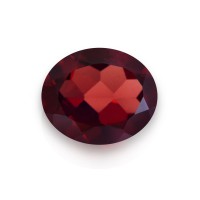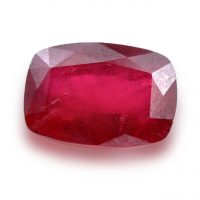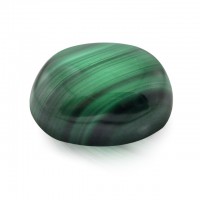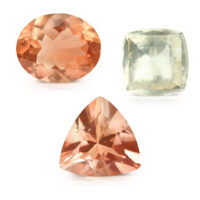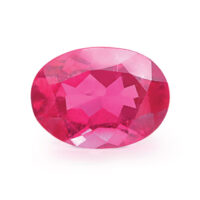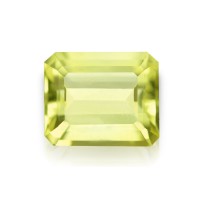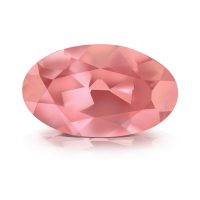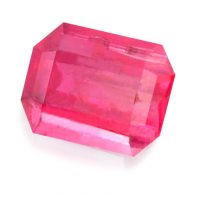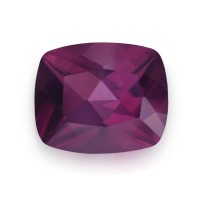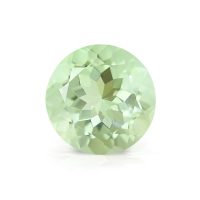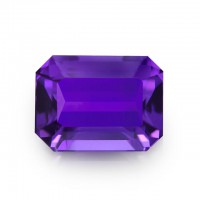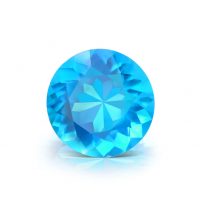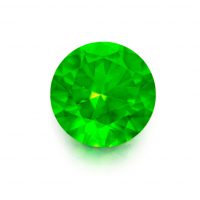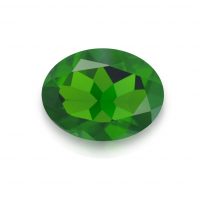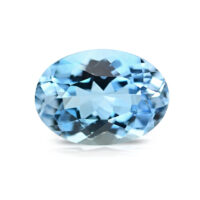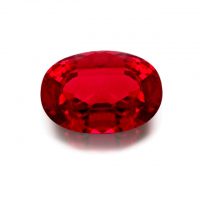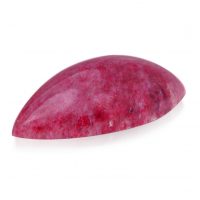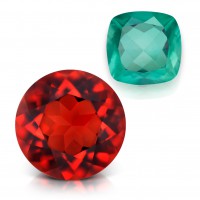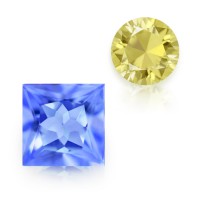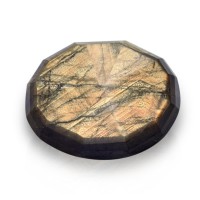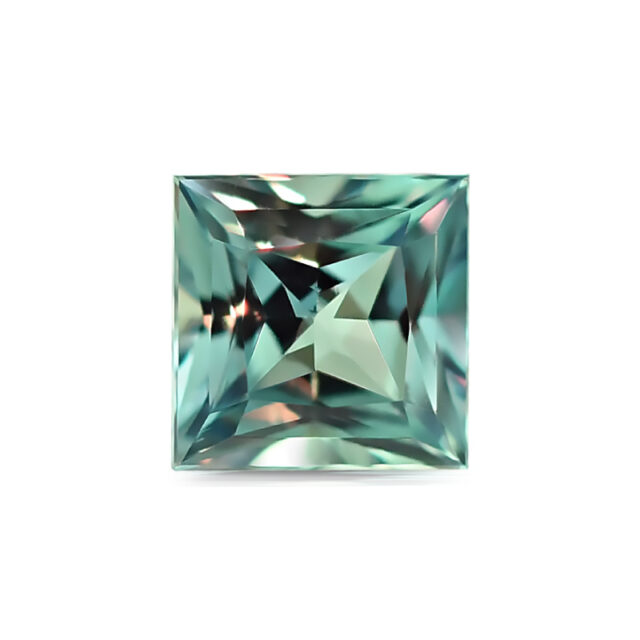
A June birthstone and the quintessential color‑changing phenomenon, Alexandrite is among the rarest and most valuable gemstones. Discovered in Minas Gerais, Brazilian Alexandrite’s meteoric rise in the 1990s reshaped the gem trade, becoming the leading origin after Russia and India declined. From Hematita (eh‑mah‑CHEE‑tah), Brazil’s finest locale, they reveal defining teals by day and raspberry‑crimsons by night, with optimal faceting and high clarity prized by collectors. Though mining has long waned, Brazil remains premier, with vaulted reserves dwindling. Beautiful, rare, wearable, exclusive — fine Alexandrite is coveted, commanding premiums.
Hardness 8.5
Refractive Index 1.746 – 1.763
Relative Density 3.70 – 3.78
Enhancement None
Beauty
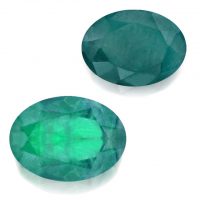
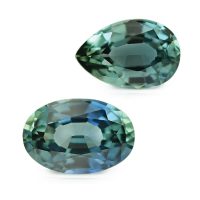
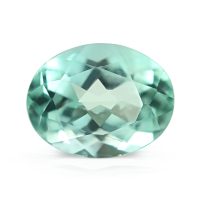
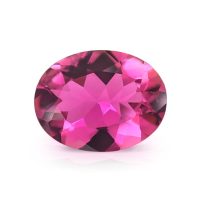
Undeniably beautiful, Alexandrite is defined by its characteristic color change — different colors visible in different light sources. Also known as the ‘Alexandrite Effect’, it is the original color changing gemstone that first started interest in this phenomenon. Brazilian Alexandrite shows vivid bluish‑greens in natural daylight and sharp purplish‑reds under candlelight (incandescent), with a highly desirable medium saturation (strength of color) and tone (lightness or darkness), the marketplace ideal.
So it’s clear: if Chrysoberyl doesn’t change color, it isn’t Alexandrite. It’s also pleochroic, more precisely trichroic, meaning each crystal can reveal three colors — green, red, and yellow — whose intensity shifts when viewed from different angles. This internal property is distinct from its celebrated color change but may impact its perception. Alexandrite’s shift is due to daylight and incandescent light containing different amounts of the spectral colors (blue, green, orange, red, violet, and yellow), and the way chromium absorbs and reflects light. Chromium absorbs the yellow spectrum as white light passes through Alexandrite, leaving a mix of blue and green. Sunlight is relatively even, proportionally containing more of the green our eyes favor, so it appears green in daylight, while incandescent light is redder, so its color changes to red. Simplistically, the better the concentration and configuration of chromium in Alexandrite, the stronger the color change. Larger Alexandrite displays a more striking shift and greater color intensity.
You may be wondering if the famous Alexandrite description “Emerald by day, Ruby by night” is really accurate. In his book Precious Stones and Gems (1898), gem pioneer Edwin William Streeter (1834 – 1923) wrote, “It has been said that the Alexandrite is an Emerald by day and an Amethyst at night,” which is telling. In reality, Alexandrite is not dependent on fixed colors. In daylight it can appear bluish-green/blue‑green, forest green, green, khaki, teal, or yellowish‑green, and combinations thereof; in incandescent light it can show brownish‑red, orangey‑red, red, or reddish‑purple, and combinations thereof.
Unsurprisingly, Alexandrite’s single biggest value consideration is its color change. Any color‑change gem is judged by the strength of its shift, and by how attractive and distinct its colors are in daylight and incandescent light. Color preference is subjective, but the ‘ideal’ Alexandrite will display distinct, medium‑toned, intense colors in both light sources, with pure daylight greens to nighttime reds valued highest. Alexandrite that shows a percentage change of less than 30 percent, or visible brownish, greyish, or yellowish tints, will be priced accordingly. Nevertheless, Alexandrite with a pure change of 90 percent or more is an extraordinary rarity for a gem that many regard as the world’s rarest.
The quality of faceting is critical, as Alexandrite must be correctly oriented to accommodate its color change and pleochroism. Our Brazilian Alexandrite was optimally faceted in Hong Kong and in the legendary gemstone country of Thailand (Siam), home to some of the world’s finest lapidaries and renowned master cutters. Each crystal was carefully oriented to maximize its signature colors and brilliance, achieving a mirror‑like polish that accentuates its vitreous (glassy) luster, an attractive overall appearance (outline, profile, proportions, and shape), and high clarity, thereby highlighting its inherent color change. Alexandrite is classed by the GIA (Gemological Institute of America) as a Type II gemstone, typically growing with minor inclusions in nature that may be eye‑visible. Our clarities are excellent for Alexandrite, ranging from eye‑clean — the highest clarity grade for colored gemstones as determined by leading gemological laboratories — to very slightly included, appearing clean to the unaided eye. Arguably regrettable, Alexandrite is often cut solely to maximize yield due to its rarity, resulting in inclusions or proportions less typical of other gems, with its color change remaining the defining value. The most common shapes are cushions, octagons, ovals, and rounds.
While color change is a rare and desirable optical phenomenon, seeing it can sometimes be challenging, especially if unrealistic expectations cloud perceptions. Most natural color‑changing gemstones are not like traffic lights. Some synthetics almost sport this ability, but they look far from ‘natural.’ Seeing color change depends on several factors, including the intensity and purity of the two light sources, your eyesight, pleochroism, time of day, and even the weather. This alludes to a potentially confusing aspect of assessing color change, called ‘bleed’ — when a gem’s two colors are visible at the same time. As most of us live in places where mixed lighting is the norm, ‘bleed’ is common, especially for light‑sensitive color‑changing gems like Anatolite (Color‑Change Diaspore). Alexandrites that genuinely show excessive bleed, diminishing their color change, will be priced accordingly. Like all color‑changing gems, Alexandrite is experiential. Viewing Alexandrite in a variety of different lighting conditions is ideal, truly revealing the beautiful appeal of its color change.
The ‘gem of the tsars’, or simply the ‘tsar stone’, Alexandrite is a gemstone forever linked to the ruler for whom it was named, Tsar Alexander II of Russia (1818 – 1881), the country he ruled, and the twilight of Russian aristocracy. A member of the Chrysoberyl family, Alexandrite is its most prized variety and, along with Pearls and Moonstones, a birthstone for June. Chrysoberyl was named by German geologist Abraham Gottlob Werner in 1790, using the Greek ‘chryso’ (golden) and ‘beryl’ (green gemstone). Chrysoberyl is a particularly brilliant gemstone, best known for its Cat’s Eye variety — chatoyancy, an optical effect resembling the slit pupil of a cat. Although rare, Chrysoberyl can also display color change, creating the esteemed Cat’s Eye Alexandrite. Most Chrysoberyl is colored yellow due to iron trace elements, but vanadium very rarely yields vivid green examples, while Alexandrite is colored by chromium. Chromium is the Midas element that gives Emeralds and some Rubies their signature hues. The Emerald deposit (Izumrudnye Kopi) on the Tokovaya River in Russia’s Urals, where Alexandrite would later be found, was discovered by chance in 1830, and by 1833 the as‑yet‑unnamed Alexandrite was identified. Although it was undoubtedly Finnish mineralogist Dr. Nils Gustaf Nordenskjöld (1792 – 1866) who determined what it was, suggesting the name Diaphanite (from the Greek ‘di’, meaning two, and either ‘aphanes’, meaning unseen, or ‘phan’, meaning appearance), in 1834 Count Lev Alekseyevich von Perovskii (1792 – 1856) coined ‘Alexandrite’, presenting it to the future Tsar Alexander II on his 16th birthday. Publishing the first scientific paper on Alexandrite in 1842, Dr. Nordenskjöld later discovered and named the green Garnet Demantoid. Tiffany’s master gemologist George Frederick Kunz (1856 – 1932) was fascinated by Alexandrite and Demantoid, introducing them both to America. Kunz was also a prolific author, writing The Curious Lore of Precious Stones and other seminal works that shaped modern gemology. Alexandrite is the ultimate gemstone of duality, with its twin colors symbolically embodying the Russian character and shifting fortunes of hope and hardship: “Look, here it is, the prophetic Russian stone! O crafty Siberian. It was always green as hope and only toward evening was it suffused with blood.” — Nikolai Leskov, The Alexandrite, Mysterious Interpretation of a True Fact (1884). Writing just three years after the death of Tsar Alexander II, Leskov cleverly tied together the fates of Russia, the Tsar, and the gem that bore his name, defining Alexandrite as a prophetic stone. One of the classic Russian writers of the 19th century, Leskov is regarded by many as “the most Russian of all Russian writers.” Coming to the throne, the liberal‑educated Alexander knew the path to take to help his people — yet he also embraced the authority of a Tsar. Assuming power at the tail end of a humiliating defeat in the Crimean War, Alexander thought the time right to modernize. Hailed as the ‘Tsar Liberator,’ his industrial reforms, new judicial administrations, and most importantly, ending serfdom, correspond to Alexandrite’s daylight greens — or as Leskov put it, “green as hope.” But by the end of Alexander’s rule, these very reforms had created a hotbed of revolutionary zeal which, true to his autocratic legacy, was ruthlessly suppressed. Native languages were banned and over 250,000 people were exiled to Siberia — an irony considering Alexandrite was discovered in the Ural Mountains. These woes came to a head in 1881, when on their third attempt the People’s Will — a radical revolutionary group — succeeded in assassinating the Tsar. In the end, Alexander’s rule, in semblance to Alexandrite’s nighttime reds, was quite literally “suffused with blood.” Even though the writing was on the wall, Alexandrite became a potent symbol of hope and nationalism for Russian tsarists after Alexander’s death, not only because of its name and alleged discovery on his birthday, but also because this extraordinary gem can echo the Imperial Russian military colors of red and green. Three Tsars later, the Bolsheviks took power, signaling the collapse of the Russian monarchy. After the fall of Imperial Russia, many saw a new age on the horizon as green as the hope mirrored in Alexandrite at the start of Alexander’s rule. But the horror of World War II, of which Russia bore the brunt, soon saw Alexandrite’s reds again linked with the color of blood, becoming known as the ‘widow’s stone.’ Intriguingly, the name didn’t dissuade interest in this gem — so much so that simulated Alexandrite (often synthetic color‑change corundum) was a mainstay of Soviet jewelry. This is doubly ironic considering Alexandrite will forever be the ‘imperial’ gem, again embodying the uniquely Russian ability to mix hope with hardship. A Russian folktale even warns that if you wear only one piece of Alexandrite you will be lonely, its two colors said to require a partner — a fitting reflection of Alexandrite’s uniquely individual nature and notorious difficulty to match.
Rarity
Color change is a rare and valued optical phenomenon in gemstones, making color‑changing gems (Alexandrite, Color Change Fluorite, Color Change Garnet, Color Change Sapphire, and Color Change Diaspore) highly coveted. Often described as the rarest of gemstones, Alexandrite’s scarcity, together with its signature color change, are the main reasons for its enduring popularity and high price – fine Alexandrite can command over USD 70,000 per carat. Extremely scarce, Alexandrite ranks second on the top‑ten list of the world’s rarest and most valuable gems (Painite¹, Alexandrite², Taaffeite³, Jadeite⁴, Red Beryl⁵, Black Opal⁶, Grandidierite⁷, Benitoite⁸, Tanzanite⁹, and Poudretteite¹⁰), while Forbes places it sixth on their list of the ‘12 Most Expensive Gemstones in the World’ (Red Diamond¹, Taaffeite², Grandidierite³, Serendibite⁴, Diamond⁵, Alexandrite⁶, Red Beryl⁷, Musgravite⁸, Benitoite⁹, Poudretteite¹⁰, Black Opal¹¹, and Jeremejevite¹²). Because of its intrinsic scarcity, Alexandrite is rare and expensive in any size. Most of what’s available is a quarter to half a carat, with the two‑, three‑, and five‑carat markers resulting in exceptional price increases due to their comparative rarity. Fine quality 10‑carat‑plus Alexandrite is either destined for museums or the realm of wealthy private collectors.
For nearly 90 years, Russia and Sri Lanka were the only known sources of Alexandrite, though Russia produced little after the 1917 revolution. With the fall of the Soviet Union, rumors of renewed mining circulated around 1995. In 2005, Colored Stone magazine reported “new activity in this area,” and in October 2006 Tsar Emerald briefly resumed production at the old Malyshev mine, established in 1833 but since closed. While Madagascar, Mozambique, Myanmar (Burma), Sri Lanka, Tanzania, and Zimbabwe have yielded small quantities of gemmy Alexandrite, Brazil and India emerged as the most significant modern origins.
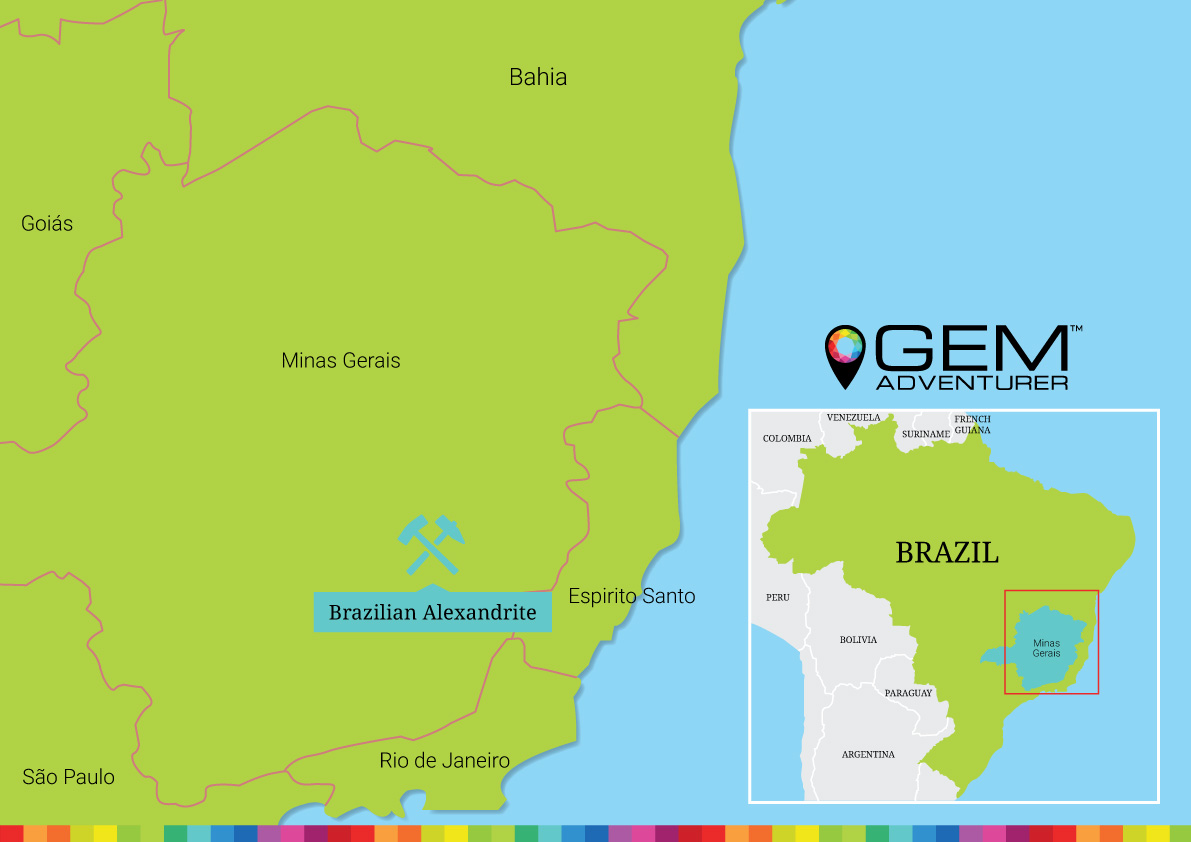
First noted in the state of Minas Gerais (General Mines) in the 1980s, Brazilian Alexandrite forms in intrusive pegmatites (coarsely crystalline igneous rocks) and schists (crystalline metamorphic rock), with chromium from surrounding ultramafic (iron‑ and manganese‑rich) rocks creating the color‑change phenomenon. Brazilian Alexandrite from Hematita (1986 – 87) and Malacacheta (mah‑lah‑kah SHEH‑tah, mined from 1975, entering the international market 1988 – 89) quickly established Brazil as the foremost source, with market value second only to Russia. Indian deposits were later discovered in Chhattisgarh (1994), Andhra Pradesh (1996), and Odisha in the late 1990s, with Andhra Pradesh supplying most until mining declined in the 2000s, around the same time the 2004 tsunami devastated this state’s coastal areas. While exceptional Indian Alexandrite exists, it typically shifts from green to brownish red with muted color change, smaller and inconsistent availability, lower market value, and less prestige compared to Brazil.
Showing vivid bluish-green/blue‑green to purplish‑red color change, Brazilian Alexandrite filled the supply gap left by the near exhaustion of Russia’s Ural deposits. Though its color change was often considered less dramatic than Russian Alexandrite, exceptional gems rivaled Russian quality and quickly gained international recognition. Brazil’s largest Alexandrite deposit, Hematita in the Antônio Dias district (Nova Era region, Minas Gerais), unearthed some of the finest Brazilian Alexandrite, with strong color change characteristics comparable to Russian Alexandrite. Mining was intensive but geologically limited, briefly producing hundreds of carats monthly, with significant production largely ceasing within a decade. Its Alexandrite is now scarce, with collector grade gems commanding high premiums. Located in the Vale do Mucuri region of Minas Gerais, Malacacheta yields Alexandrite with slightly different color characteristics, remaining an important secondary source though not as prolific. In general, Hematita Alexandrite shows strong bluish‑green to green in daylight and intense purplish‑red to raspberry‑red under incandescent light, with sharp, dramatic color change and high saturation. Malacacheta, by contrast, often appears yellowish‑green to olive‑green in daylight and brownish‑red to dull purplish‑red under incandescent light. While there is some crossover with Hematita, their color change is softer, saturation more moderate, and they are usually valued lower. Given their colors, our Brazilian Alexandrite is consistent with Hematita, Brazil’s most celebrated source.
While large‑scale mining has diminished, Brazil remains Alexandrite’s primary source, though availability has markedly reduced. Through the late 1980s and 1990s, heavy mining brought large Brazilian Alexandrite crystals with strong color change into the market. From the 2000s to the present, Hematita is largely exhausted, Malacacheta’s mining modest, and although Alexandrite is unearthed in other parts of Minas Gerais, Bahia, Espírito Santo, and Goiás, none rival the historic output of Hematita. Brazilian Alexandrite remains the most significant origin globally, with gems more accessible than Russian equivalents.
With over 90 percent of gemstones treated, enhancements are prevalent in the marketplace and can significantly impact price. Alexandrite is one of the few gemstones that remains entirely natural and unenhanced, accentuating its desirability, rarity, and value.
Durability & Care
A durable jewelry gemstone well‑suited to everyday wear, Alexandrite (Mohs hardness: 8.5) should always be stored carefully to avoid scuffs and scratches. Clean with gentle soap and lukewarm water, scrubbing behind the gem with a very soft toothbrush as necessary. After cleaning, pat dry with a soft towel or chamois cloth.
Map Location
Click map to enlarge