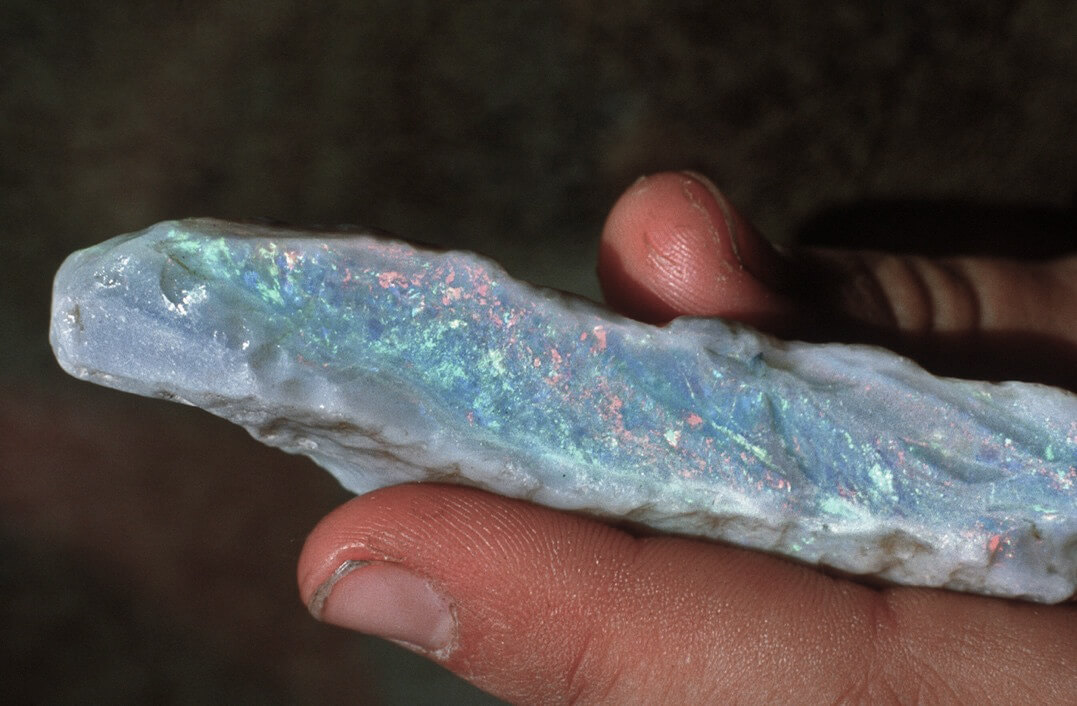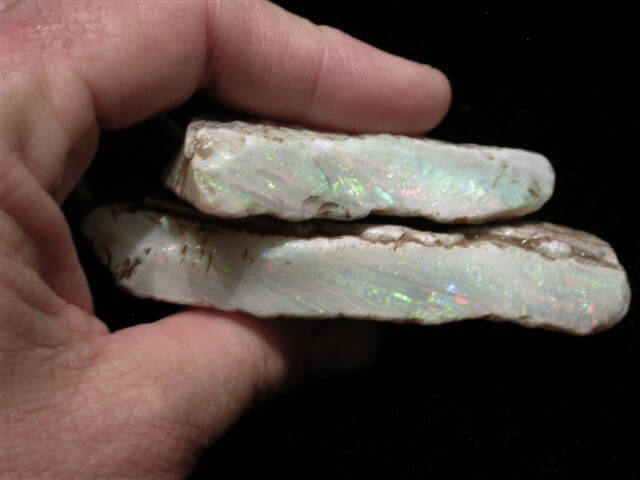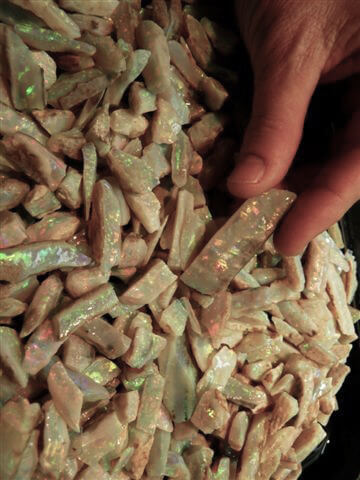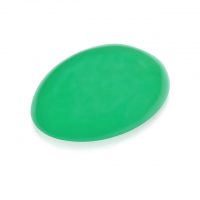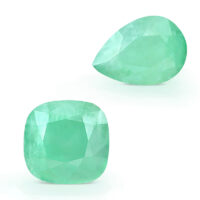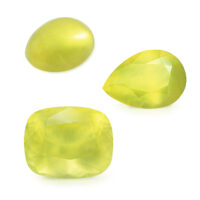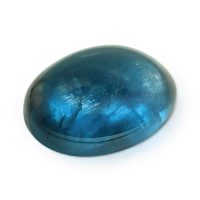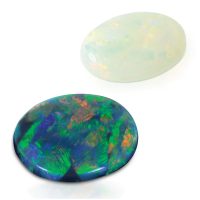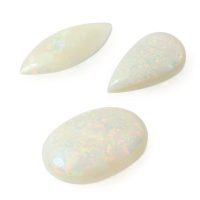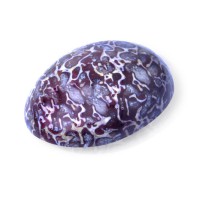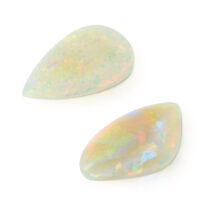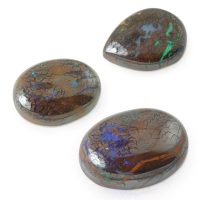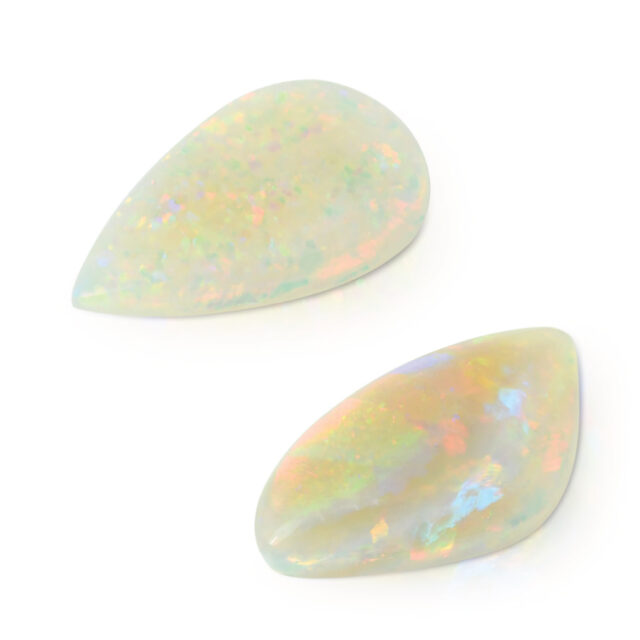
Acclaimed for its exceptional beauty, Mintabie Opal is among Australia’s most distinctive gemstone origins. Located in South Australia, Mintabie grew from an early 20th‑century discovery into a premier 80s Opal locale. Uniquely situated on Indigenous lands, Mintabie closed in 2019, leaving jewelers reliant on ever‑declining historic reserves. Long‑vaulted by the miner and exceedingly scarce, our Mintabie Opals were mined and cut in Australia during the 80s and 90s. With vivid color‑play that appears to trap rainbows within, Mintabie Opal’s fine quality, undeniable rarity, and wearability remain highly valued by discerning collectors.
Hardness 5.5 – 6.5, occasionally 7+
Refractive Index 1.370 – 1.520
Relative Density 1.98 – 2.50
Enhancement None
Beauty
Exclusive to Opal, ‘play of color’ refers to the beautiful flashes of color that change with the viewing angle. Opal is uniquely comprised of microscopic silicon dioxide spheres (1,500 – 3,500 angstroms in diameter; one angstrom equals one ten‑millionth of a millimeter) arranged in a pyramid‑like grid, interspersed with three to six percent water. Light diffraction through Opal produces its characteristic play of color. Opals without play of color have their spheres more randomly arranged. When white light enters the gem, it refracts and diffracts through the spheres and gaps, splitting into spectral colors like a prism before returning to the surface, giving Opal its signature rainbow‑like display.
While Ammolite and Labradorite split light through lattice layers, Opal is the only gemstone that diffracts light in this way. The diameter and spacing of the spheres control the color range of an Opal, with the size and angle at which light is split determining the color produced. The color rarity hierarchy is red, orange, yellow, green, blue, and violet, with value lying in the brilliance, brightness, and strength of colors displayed. For example, the rare reds and oranges are reflected from the scarcer smaller spheres, approximately 3,500 angstroms in diameter, while Opal’s blues are reflected from the more common larger spheres, about 1,500 angstroms in diameter. The rest of the colors of the rainbow occur between these sizes. Opals that display red can also display all the other colors of the spectrum, but… even though the presence of red increases an Opal’s rarity and value, it is typically valued lower than one that shows several colors. The patterns of color also affect value, with large patches of color priced higher than those with small color patches. An Opal with a play of color comprising more than half of one color is named for its primary hue, while an Opal with three or more hues is called ‘multicolor’. The most artistic gemstone, each Opal shows its own color personality, keeping individual tastes important.
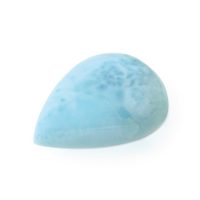
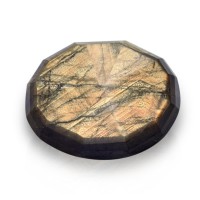
Opals are classified by their host rock (also known as ‘matrix’, including ‘potch’, Opal without color play) on which gemmy Opal forms, and their resulting transparency, and body color (the base color on which Opal’s color play is visible). For lighter colored Opals (White, also known as ‘Light Opal’, and Jelly, crystal Opal without host rock), transparency generally demands a premium. Our Mintabie Opal is translucent to opaque with a crystal, white (light) and occasionally darker body color, showing a vibrant, full‑spectrum play of color in a range of highly desirable patterns including, broad flash/flag, floral, harlequin, picture, pinfire, and rolling flash. Known for its durable Jelly, White, and coveted Black Opal, Mintabie’s color bars are often uniquely layered. When compacted or narrow, these can be sliced across the layers, unlike traditional lapidary, which typically follows the color bar. This creates stunning picture‑like patterns formed by the cross‑section of crystal, potch, and host sandstone, resembling abstract art or landscapes.
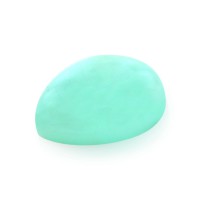
Deft lapidary that accentuates Opals’ innate beauty and signature color play is absolutely critical. Originally cut by the miner in Adelaide, roughly an 11½‑hour drive from Mintabie, many pieces were optimally recut in a dedicated Melbourne Opal workshop. Unsurprisingly, Australia remains home to some of the world’s very best Opal cutters. Every Opal in this collection has been expertly cut ‘en cabochon’ (cut in convex form and highly polished, but not faceted) by experienced lapidaries, with a superior mirror‑like polish accentuating their often vitreous (glassy) or pearly luster, as well as an excellent overall appearance (outline, profile, proportion, symmetry, and shape). Due to their hard host sandstone, Mintabie Opals are more difficult to cut when compared to other Australian Opals, but inversely, this toughness is excellent for yield preservation.
An October birthstone, Opal derives from the Greek ‘Opallios’, meaning ‘to see a change’, and is comprised of silica and water, the main components of glass. When silica beneath the earth mixes with water, a silica solution forms. If this solution fills voids or becomes trapped in layers underground, Opal begins to form. Australian Opals were typically formed between 145.5 and 65 million years ago, spanning the Cretaceous to Tertiary periods, within a huge inland sea’s geological feature called the ‘Great Artesian Basin’. The majority of Australia’s Opal fields are located in the basin and were formed from the weathering of sandstone deposited over older host rock. While Opal has been Australia’s national gemstone since 27th July 1993, this gem has been integral to Indigenous Australian culture for over 60,000 years. Dreamtime legends passed down by storytellers call Opal the ‘fire of the desert’, linking it to creation myths, describing how their ancestral creator came to earth on a great rainbow, which turned the rocks it touched into resplendent Opals. Thought fortuitous in many cultures, the Indigenous Australians of the Anangu Pitjantjatjara Yankunytjatjara (APY) lands believe these footprints of the creator bring harmony to their people. Comparatively, the ancient Greeks believed Opal possessed the power of foresight, invisibility, and prophecy, while the Romans considered them symbols of hope, love, and purity, wearing them as talismans for protection from danger, apt for a gemstone with a rainbow trapped within.
Rarity
While Australia’s Opal fields are the world’s largest, only 25 percent are gem‑quality. Despite ever‑burgeoning global demand, Australian Opal output declined by over 50 percent in the last decade, significantly increasing scarcity and prices, especially when calibrated for jewelry collections. This is due to the depletion of commercially viable areas and mounting operational costs, combined with the inherent remoteness and inhospitality of Australia’s Opal fields. Despite increasing scarcity, Antipodean Opal’s famous pedigree thankfully endures, with Australia still unearthing the majority of the world’s finest Opals.
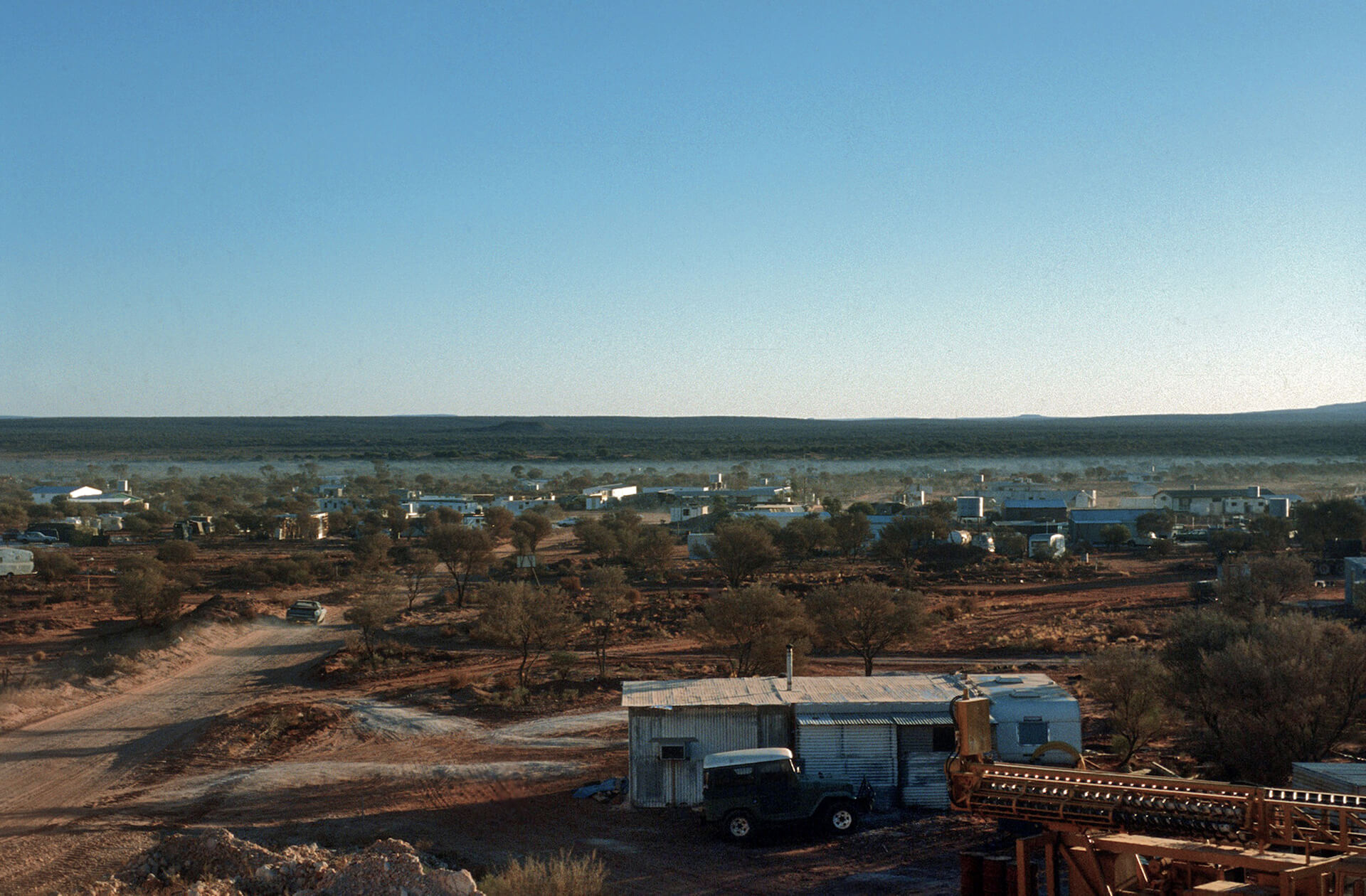
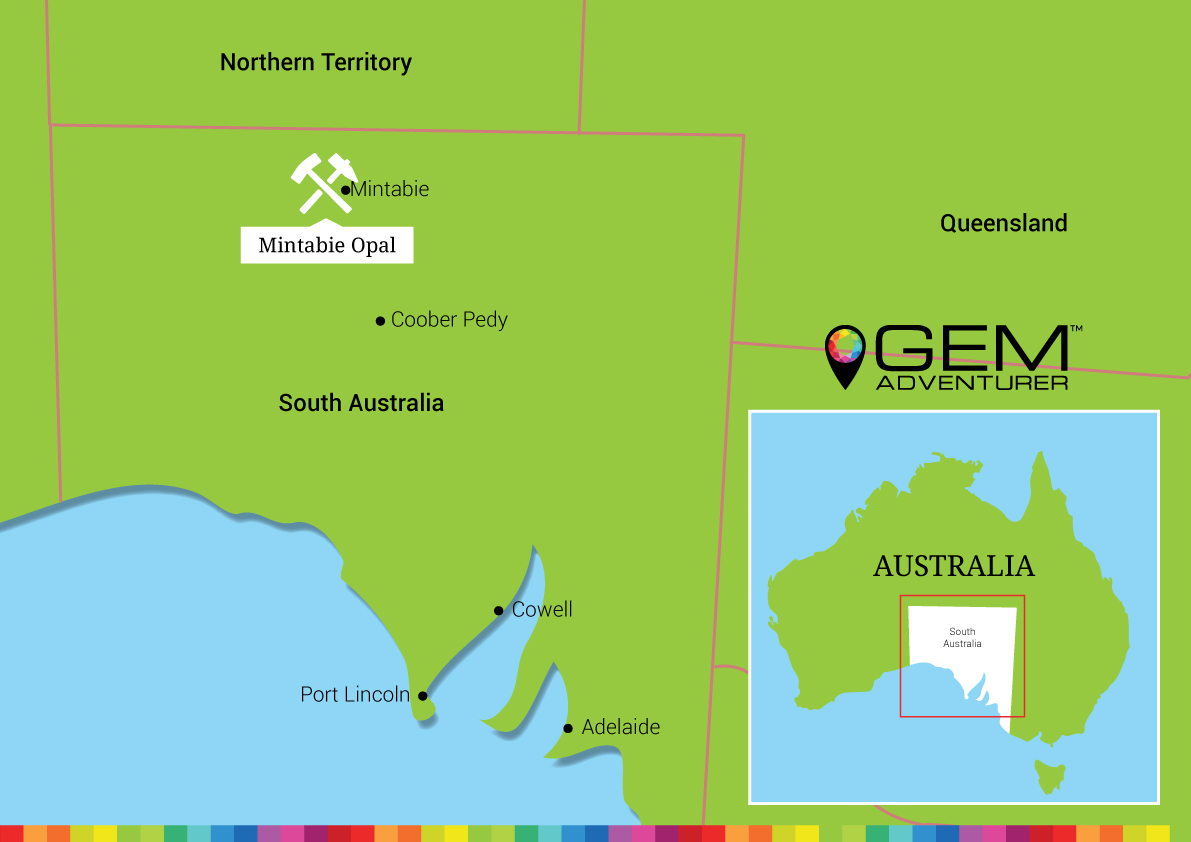
Located 300 kilometers north of Coober Pedy in South Australia, Mintabie’s Opal fields uniquely lie on Indigenous freehold land of the APY people, making them distinct among Australian Opal fields. The origin of the name Mintabie is uncertain. While some suggest it may derive from Indigenous languages, this has not been linguistically verified. However, Indigenous Australians were the first to discover Mintabie Opals, trading them at Coober Pedy during the First World War. The earliest ‘official’ record is attributed to well‑digger Larry O’Toole, circa 1920 – 1935, with Mintabie formally listed as a gem field in 1933.
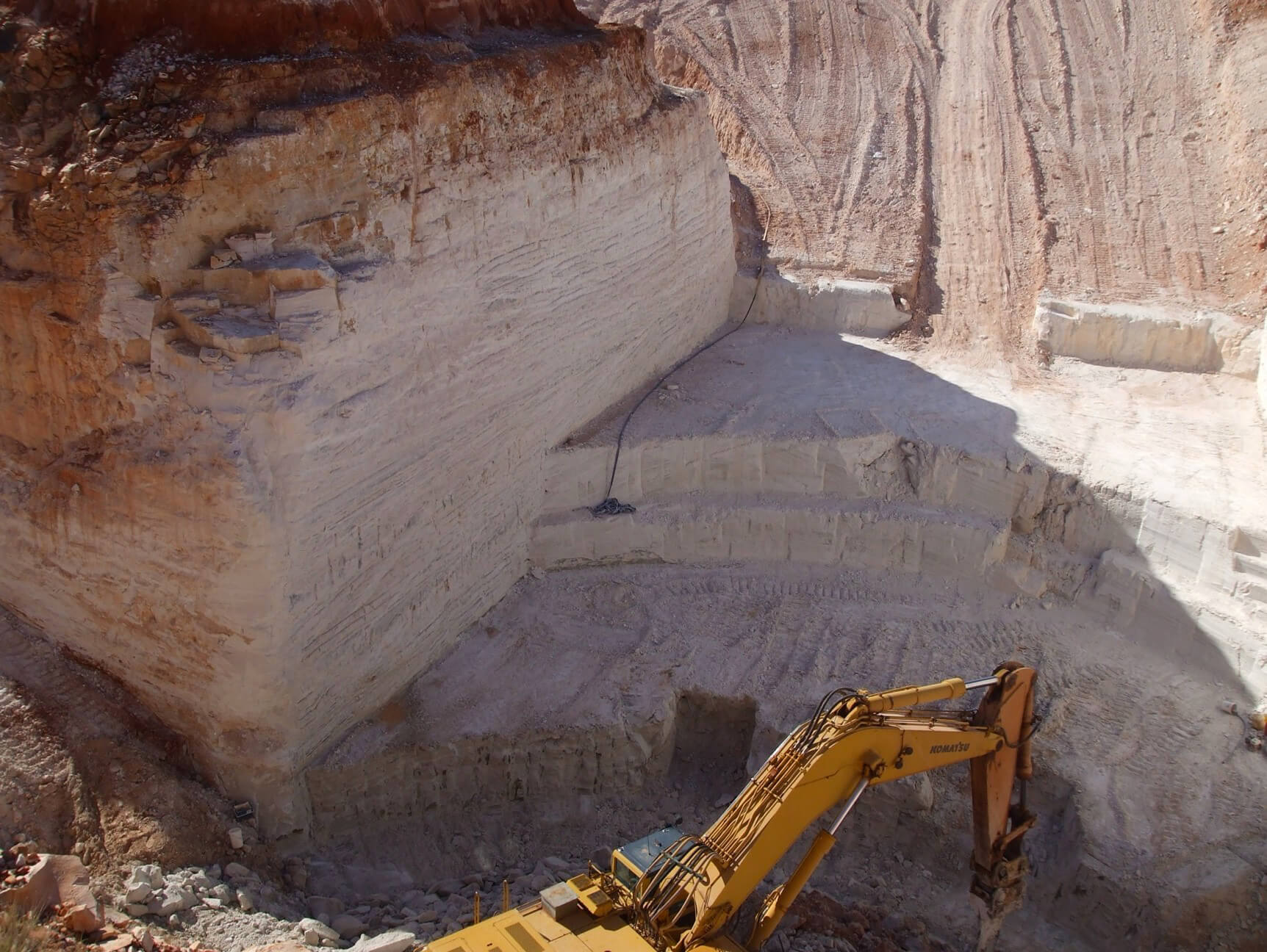
Mintabie Opals are renowned for their high quality, appearing in a wide spectrum of colors, from pure hard crystal to translucent and opaque whites, to black, and even occasional Fire Opals. Formed within Cretaceous sediments along the edge of the Great Artesian Basin, Mintabie Opal’s old and hard sandstone host rock makes mining and cutting more challenging. Unlike most Australian Opal fields, which are typically Cretaceous in age, Mintabie’s geology dates back to the Ordovician, 485 – 444 million years ago.
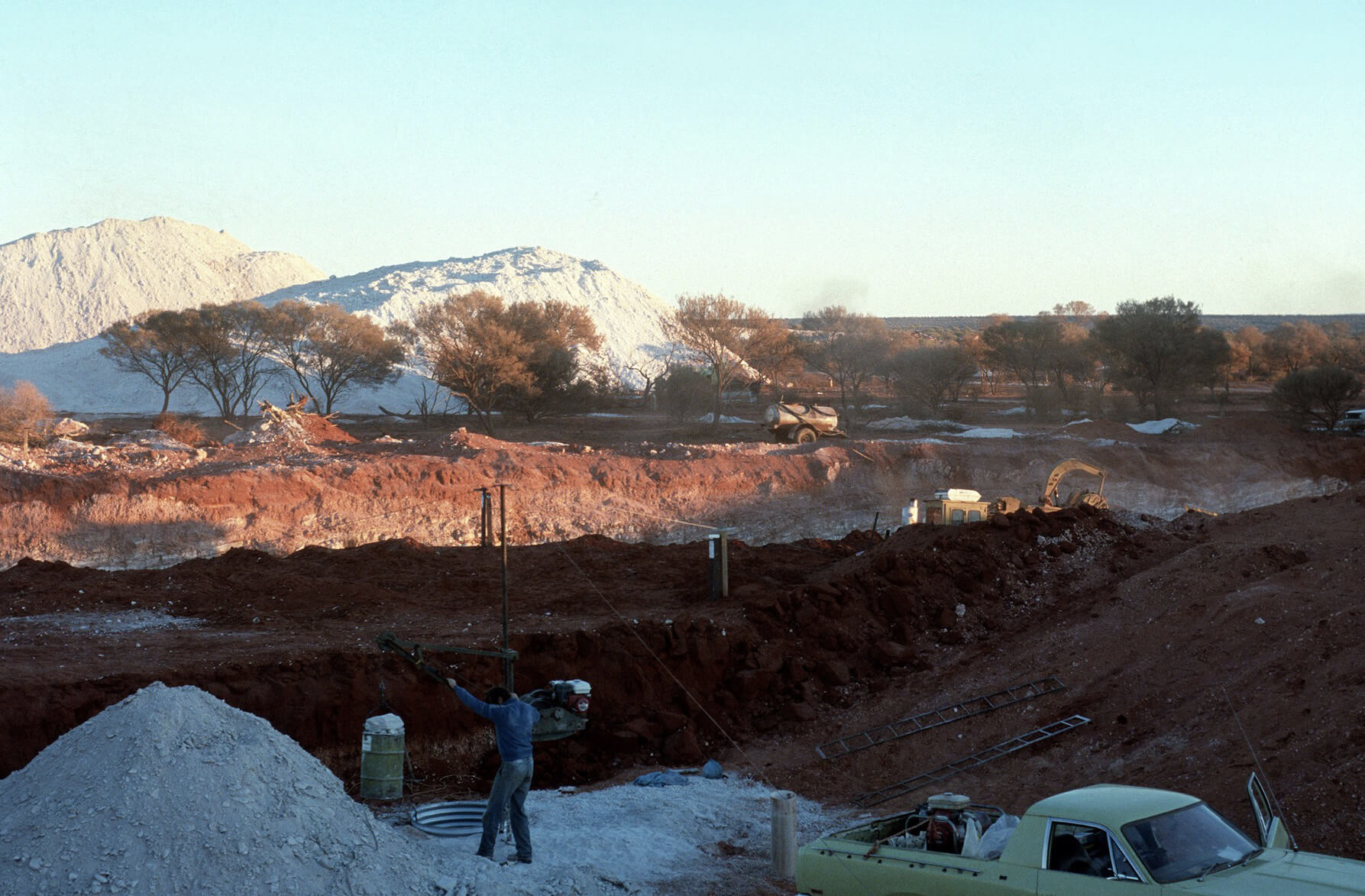
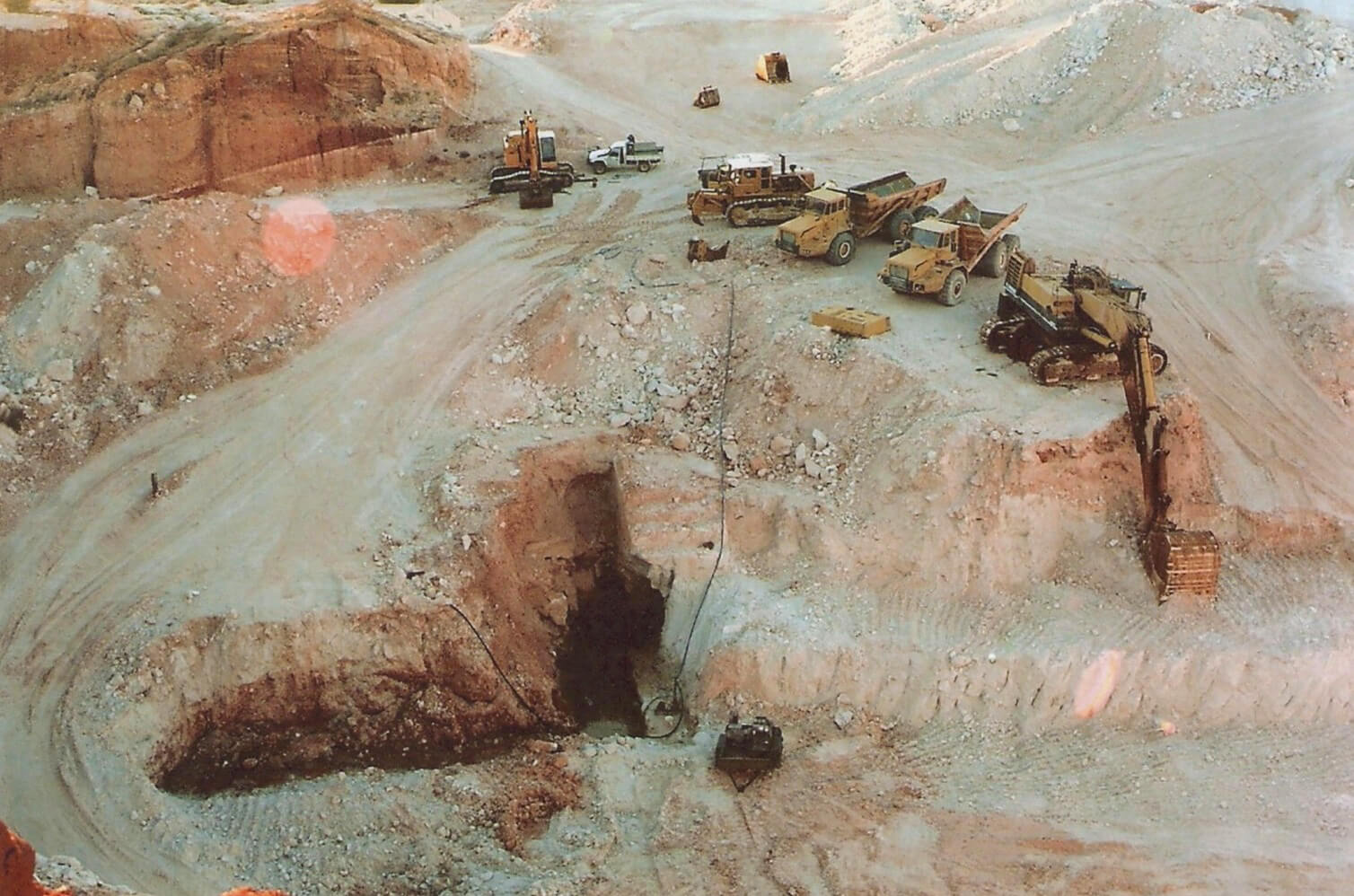
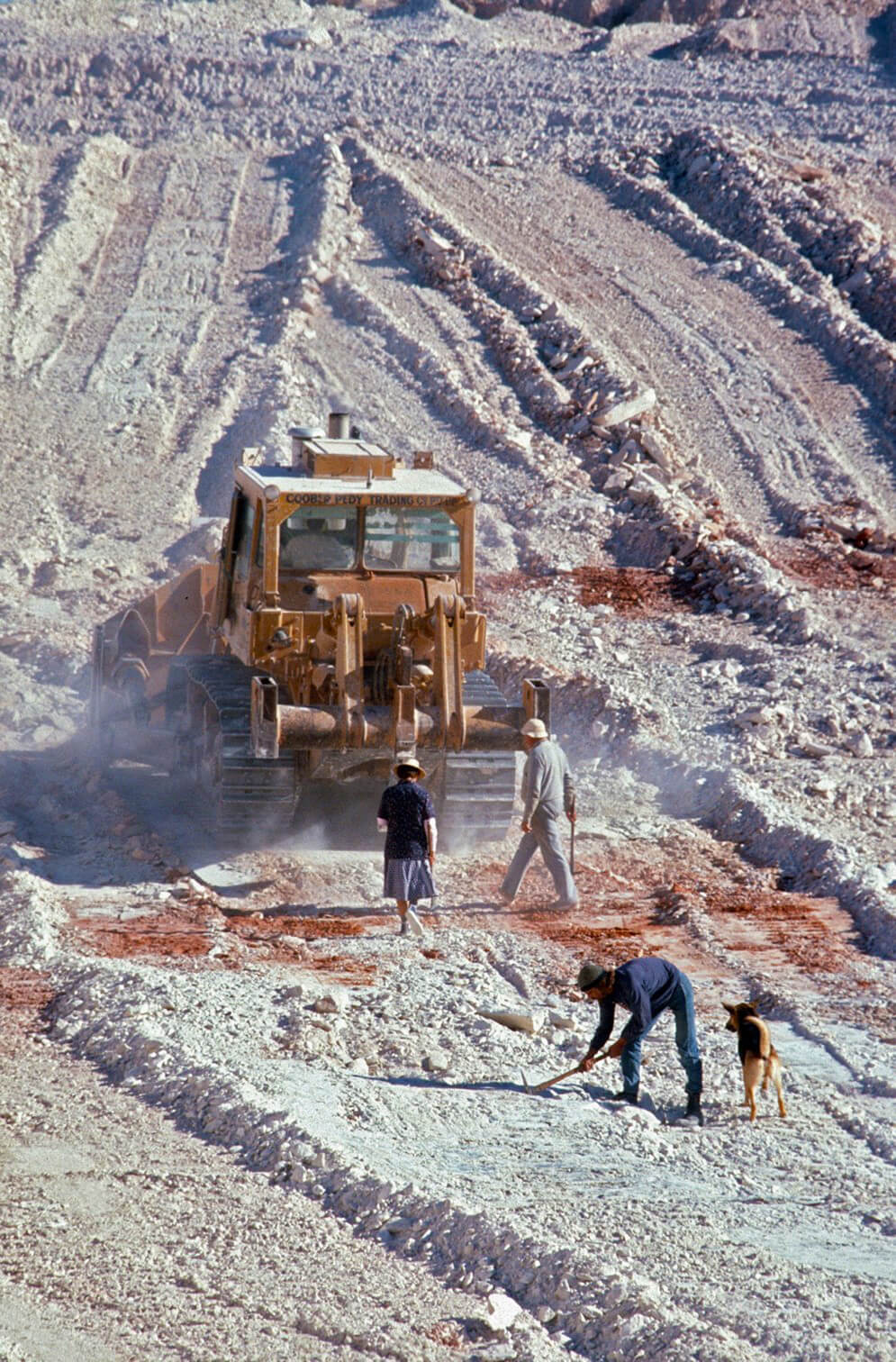
Due to the extremely hard sandstone, hand mining at Mintabie was difficult, with harsh conditions and a lack of water preventing significant commercial activity until the mid‑70s. While some Opal was recovered in the 60s, the introduction of explosives and heavy machinery in 1976 enabled large‑scale, non‑Indigenous miners to work the field, leading to the establishment of a small township with roughly 1,500 residents in 1988. Mined using exploratory shafts and open pits, several areas were worked during Mintabie’s boom, including Crystal Valley, Fossil Creek, Goose Gully, Grasshopper Ridge, Gus Gully, Hawks Nest, Kingfisher, and the Mintabie Old Field, which had been operated since 1935. By the 80s, Mintabie was Australia’s largest Opal Field by value, even surpassing Lightning Ridge.
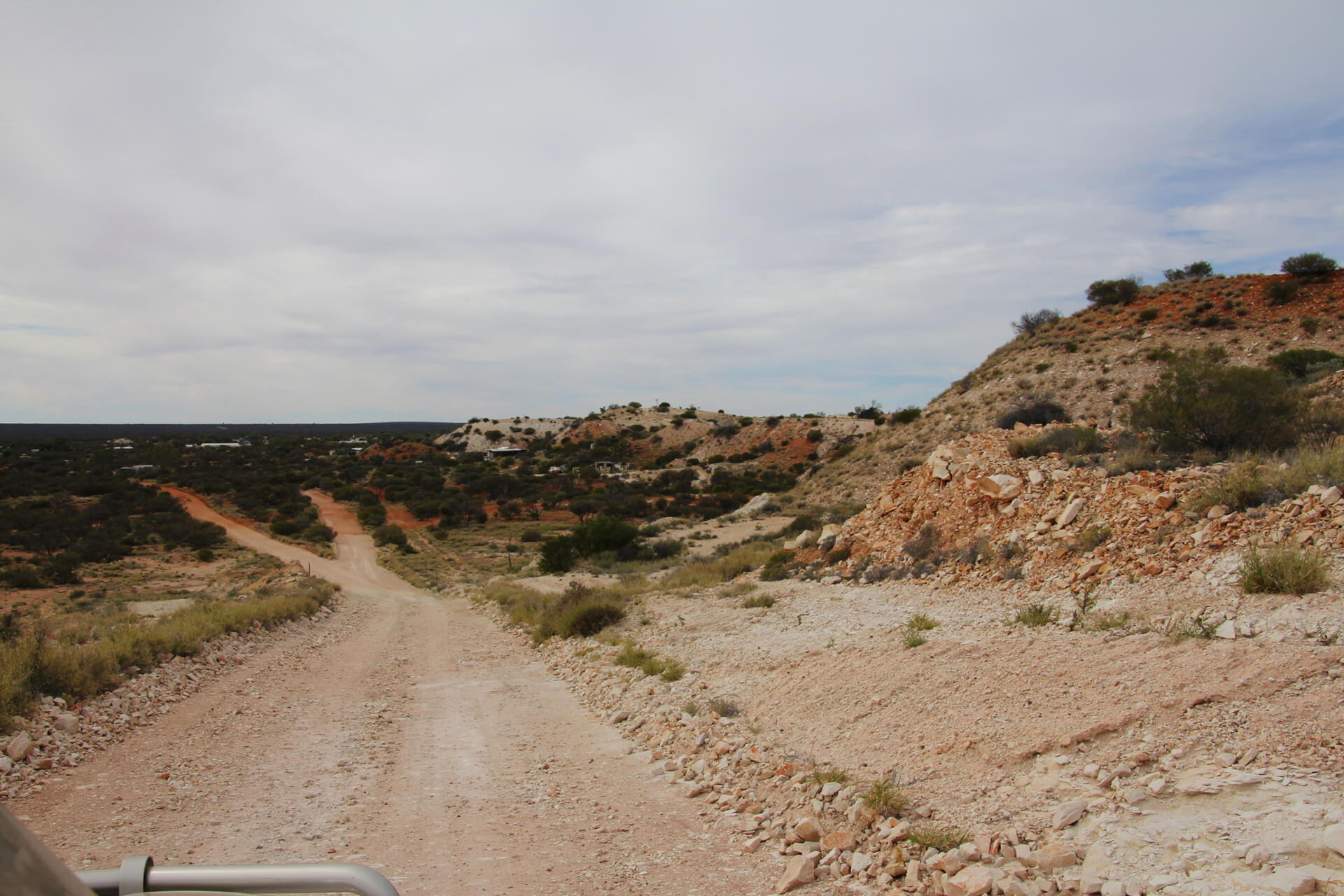
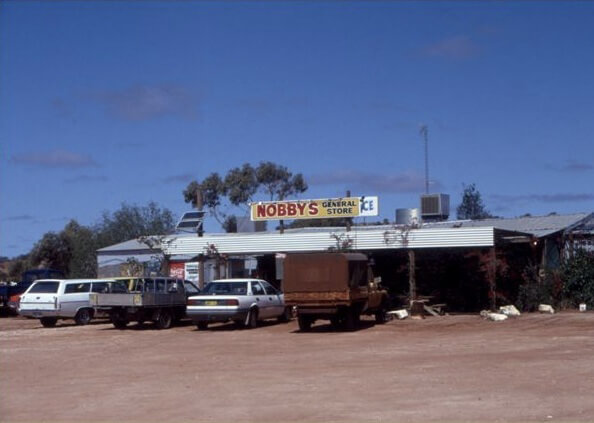
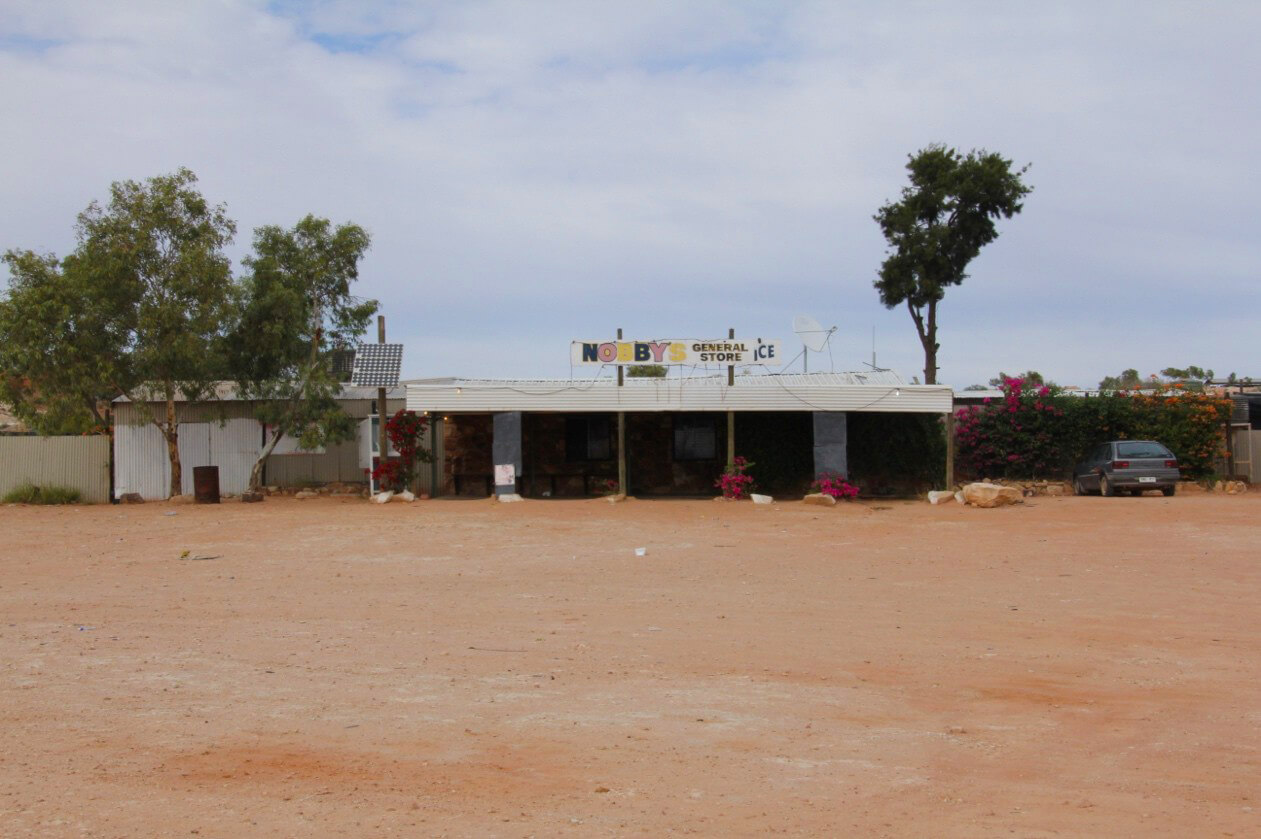
Leased to the South Australian government for Opal mining since the 80s, Mintabie’s closure had been an issue since then. Motivated by declining yields, land rights disputes with the APY council, and environmental concerns, in February 2018 the government announced township leases would not be renewed. This resulted in the compulsory closure of Mintabie in 2019, with the last structures scheduled for removal by July 2023. Although closed to inhabitants, limited mining is still permitted, though its remoteness makes operations practically untenable. Today Mintabie is one of Australia’s unique abandoned outback settlements, while the other South Australian fields of Andamooka, Coober Pedy, and Lambina have unfortunately also faced considerable downturns.
Their unique character and unrivalled beauty keep Australia the world’s premier Opal origin, but availability continues to decline irrespective of growing demand. Importantly, our Mintabie Opals are natural, solid, and unenhanced, underscoring desirability, rarity, and value.
Durability & Care
Their colorful brilliance aside, Mintabie Opals are also coveted for their hardness and stability, a key consideration for a gem containing three to six percent water. A durable jewelry gemstone, Mintabie Opal (Mohs Hardness: 5.5 – 6.5, occasionally 7+) is well‑suited to everyday wear. Always store Mintabie Opal carefully to avoid scuffs and scratches. Clean with gentle soap and lukewarm water, scrubbing behind the gem with a soft toothbrush as necessary. After cleaning, pat dry with a lint‑free towel or chamois cloth.
Map Location
Click map to enlarge