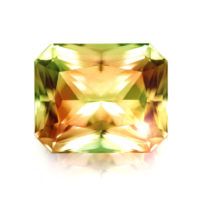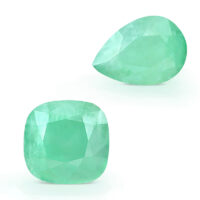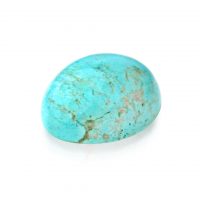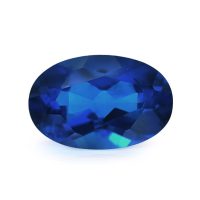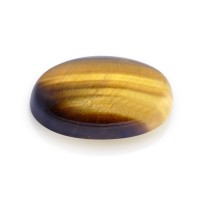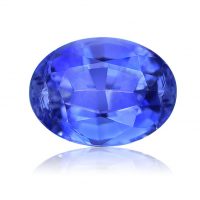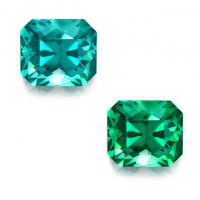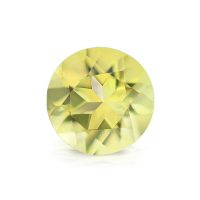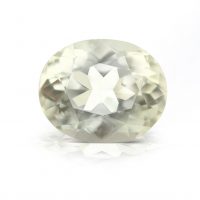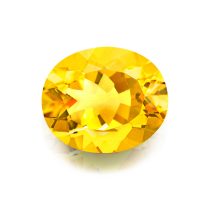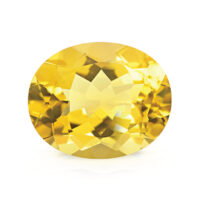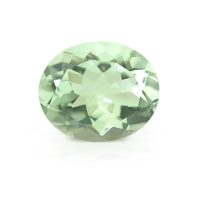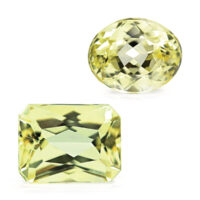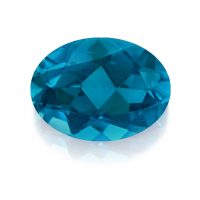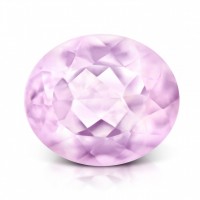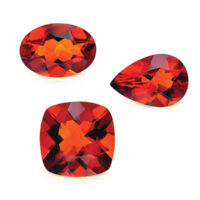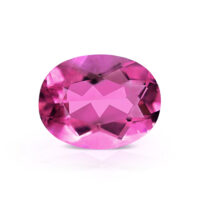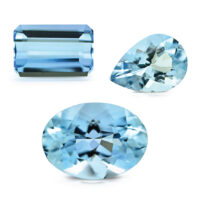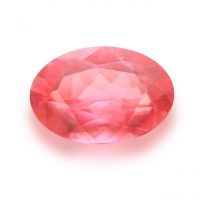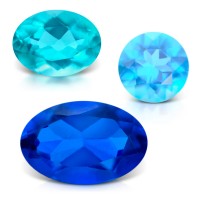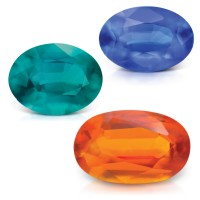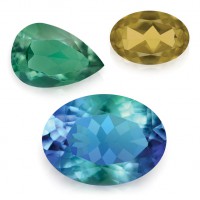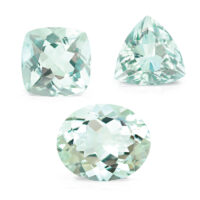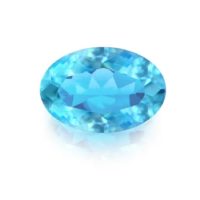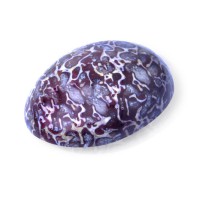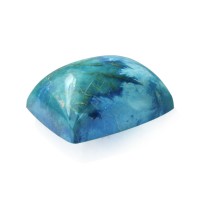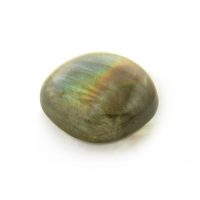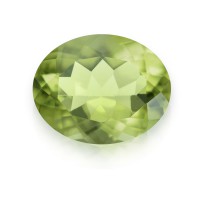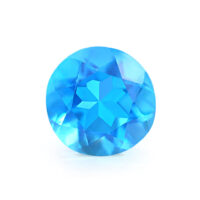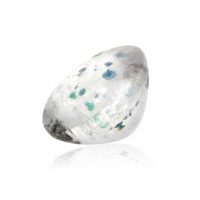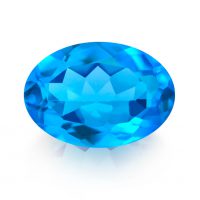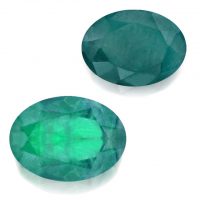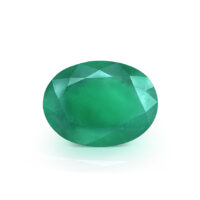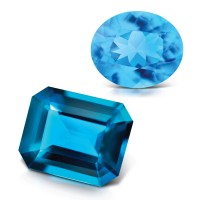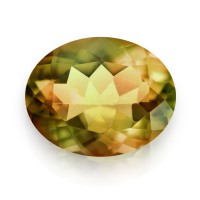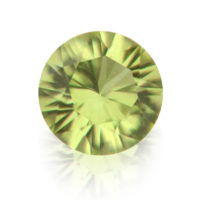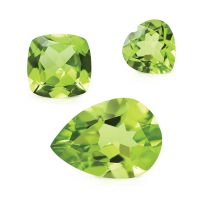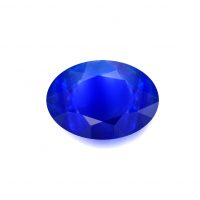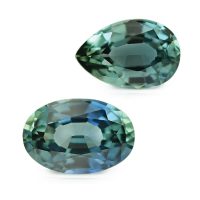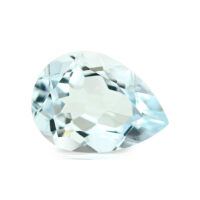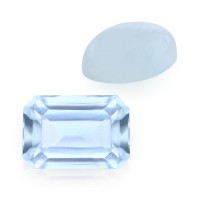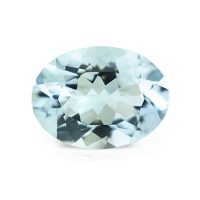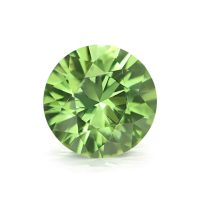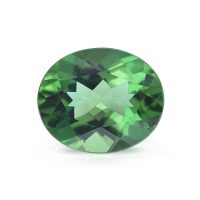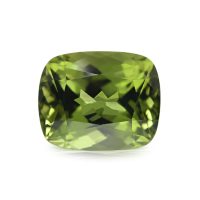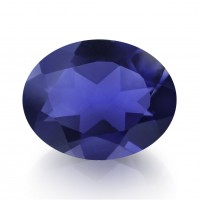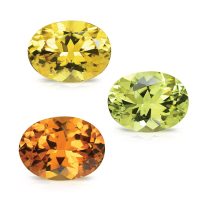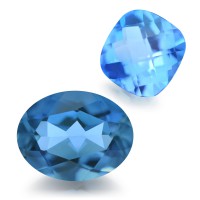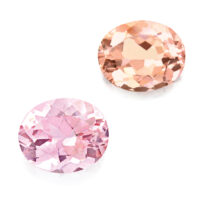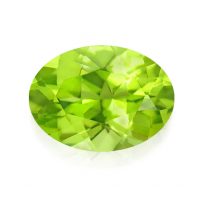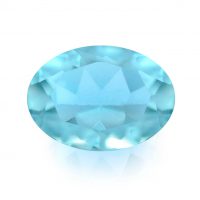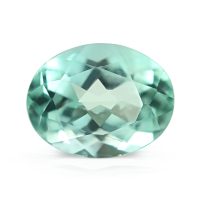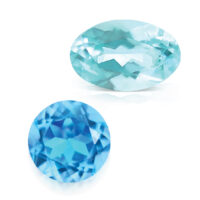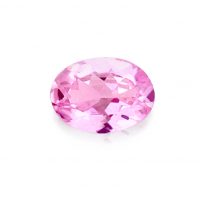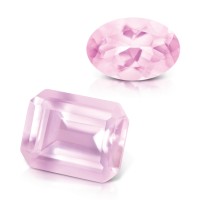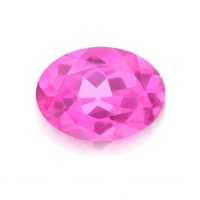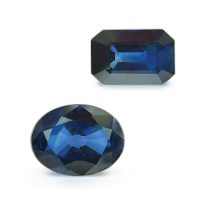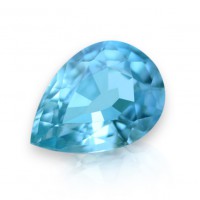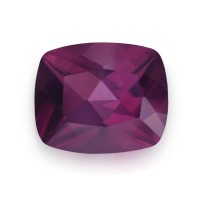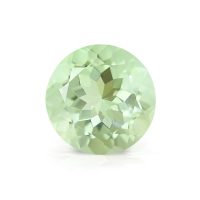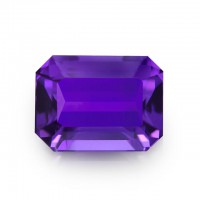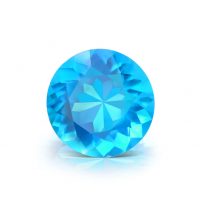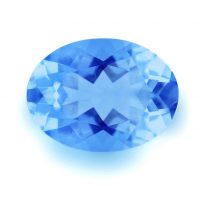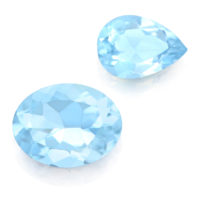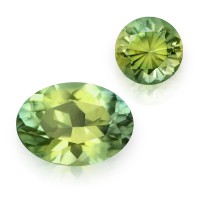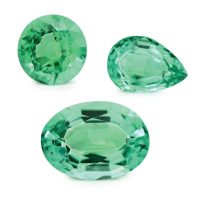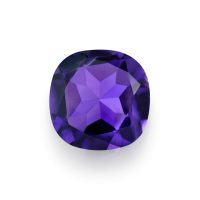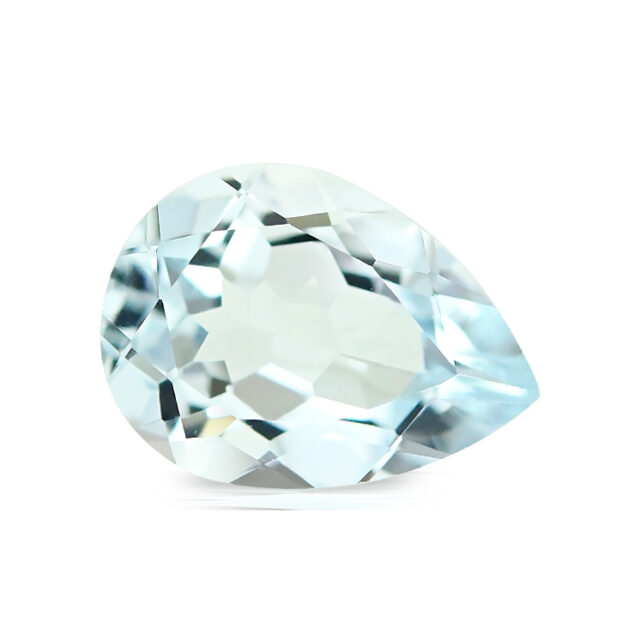
Prized by ancient Egyptians, Greeks and Romans for its oceanic air, Aquamarine is today, a highly-coveted jewelry gemstone. Showcasing March’s birthstones quintessential pastel-blues, Kenyan Aquamarine comes from Taita Hills in Kenya’s acclaimed Taita-Taveta County. Mined since the 80s, Kenyan Aquamarine features this gemstones’ classically beautiful traditional color, high-clarity, excellent brilliance, and everyday wearability. While Kenyan Aquamarine reflects its country’s rich gem tradition, gemmy-clean crystals suitable for faceting are scarce, keeping this wonderful African Aquamarine relatively unknown and distinctly collectable.
Hardness 7.5 – 8
Refractive Index 1.562 – 1.602
Relative Density 2.71 – 2.90
Enhancement Heat
Beauty
Ranging from pastel to intense deep blues, sometimes with splashes of green, Aquamarine is a Beryl sister gem to Emerald and Morganite. Due to its excellent brilliance, high-clarity/transparency, and vitreous (glassy) luster, Aquamarines’ color, along with deft lapidary, are the key value determinants.
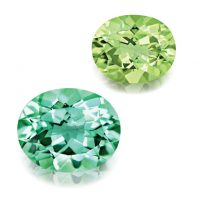
With Aquamarines’ typical, classic, pastels the marketplace standard, Kenyan Aquamarines’ delightful aqua-blues light saturation (strength of color) and tone (lightness or darkness of color), beautifully fulfils this ideal. Radiating regardless of eye color or complexion, this signature color, along with exceptional brilliance and durability, makes them a well-suited and popular choice for jewelry.
As colors’ Aquamarines crucial value consideration, optimal lapidary accentuating color is vital. Kenyan Aquamarines expertly faceted in the famous Indian gem city of Jaipur, home to some of the world’s very best Beryl lapidaries. Each crystal was carefully orientated to maximize its colorful brilliance and scintillation (play of light), maintaining an eye-clean clarity (the highest quality clarity grade for colored gemstones, as determined by the world’s leading gemological laboratories), a superior mirror-like polish (accentuating its vitreous ‘glassy’ luster), and an attractive overall appearance (outline, profile, proportions, and shape).
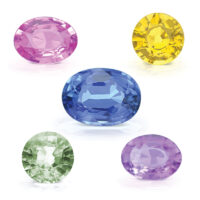
Coined by the Romans over 2,000 years ago, Aquamarine literally means ‘water of the sea’ in Latin, from the words ‘aqua’ (water) and ‘marina’ (sea). Aquamarines’ a member of the Beryl mineral family, from the ancient Greek ‘beryllos’, blue-green stone. Commonly known as the ‘mother of gemstones’ because of its highly-regarded varieties, Beryl is colorless with trace elements responsible for its wonderful hues. Aquamarine is colored by trace amounts of both ferrous (Fe²⁺) and ferric (Fe³⁺) iron in its crystal structure. While Ferric iron replacing aluminum in Beryl gives a yellowish color, and ferrous iron blue, they both occur in Beryl, typically causing bluish-greens. Apart from its blues, other Beryl gemstones include, Emerald greens, Golden Beryl yellows, Goshenite whites (colorless), Heliodor greenish-yellows, Morganite pinks, and Red Beryl reds. Predictable given its color and name, one myth says Aquamarine originated from treasure chests, hoarded by magnificent mermaids. During antiquity, Aquamarine was praised for its ability to protect sailors from the wrath of Poseidon (the Greek god of the sea, Neptune in Roman mythology), thereby guaranteeing seafarers a safe voyage. Wearing amulets of Aquamarine to instill bravery in their hearts, in a pinch, these talismans could be thrown overboard as offerings to cool Poseidon’s temper, so storms would subside. Given Aquamarine’s mythology, it’s unsurprising that it was also regarded by the ancients as fostering calmness, purification, serenity, tranquility, and wisdom.
Rarity
Prior to Aquamarine’s modern African discoveries (circa 1830), Brazil and Russia produced the finest-quality. While Brazil’s still a notable source, Kenya, Madagascar, Mozambique, Nigeria, and Zambia, also yield beautiful Aquamarines. More recently, stunning Aquamarine was found in Afghanistan and Pakistan, giving hope to the region’s future mining potential.
Since the 60’s, East Africa’s Mozambique Belts’ deposits have yielded some amazing gemstones. The Mozambique Belt is a band in the earth’s crust encompassing East Antarctica, East Africa, and the Arabian-Nubian Shield. Although other African Aquamarines are better-known, significant deposits of Kenyan Aquamarine have been mined since the 80s. These sources are often associated with the intense gemstone exploration of South-East Kenya during the 70s, such as the discovery of Tsavorite, which helped open the region to further mineral exploration. Mainly found in the Taita Hills area of Kenya’s Taita-Taveta County, Kenyan Aquamarines also occur elsewhere in this County, as well as in the nearby Embu and Samburu Counties. Kenya’s distinct geological features contribute to the formation of Aquamarine pegmatites (coarsely grained igneous rocks), but high-quality, gem-grade crystals are quite rare, limiting Kenyan Aquamarines availability and awareness.
While Aquamarines hugely popular, and a gem most people immediately find attractive, its classic pastels are the marketplace norm, with its incredibly scarce, more intense blues, commanding significantly higher prices. Well-over 90 percent of Aquamarines available in the marketplace are heated to permanently improve their color (i.e. removing greens or yellows for a purer blue). When enhanced by relatively low-heat (approx. 400°C) in a reducing (oxygen-free) environment, Aquamarine’s ferric iron converts to ferrous iron, making bluish-greens bluer, with higher temperatures potentially causing discoloration. While heating can result in an almost pure light-blue Aquamarine when successful, this doesn’t always work, even after several attempts.
Durability & Care
Kenyan Aquamarine (Mohs’ Hardness: 7.5 – 8) is an excellent choice for everyday jewelry. Always store Kenyan Aquamarine carefully to avoid scuffs and scratches. Clean with gentle soap and lukewarm water, scrubbing behind the gem with a very soft toothbrush as necessary. After cleaning, pat dry with a soft towel or chamois cloth.
Map Location
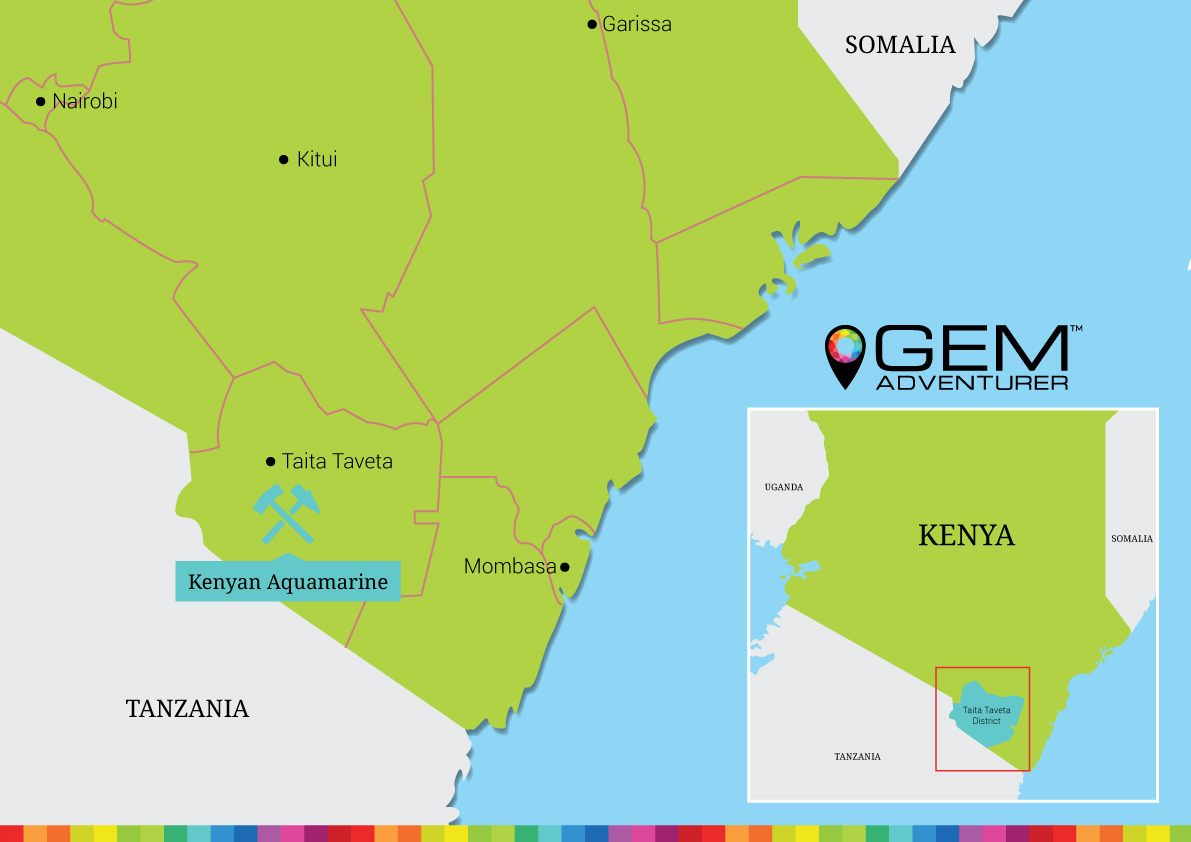
Click map to enlarge