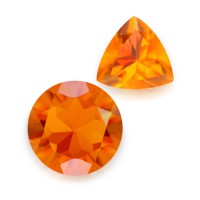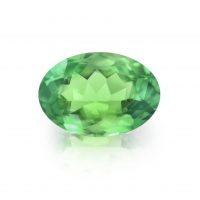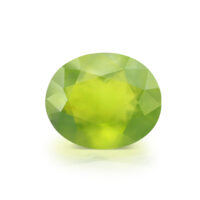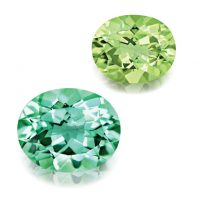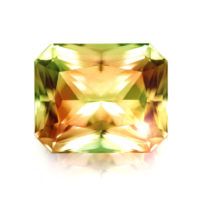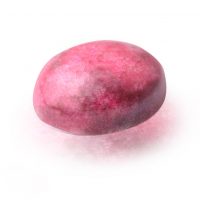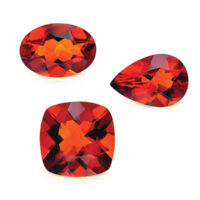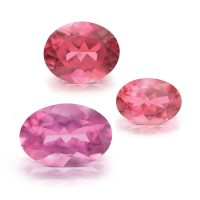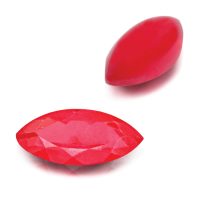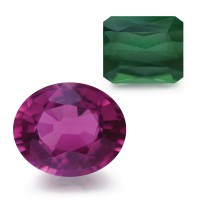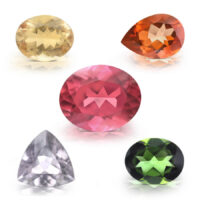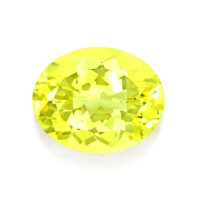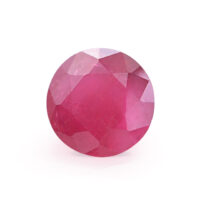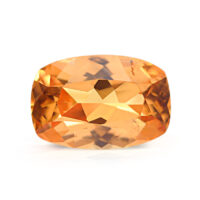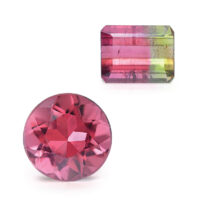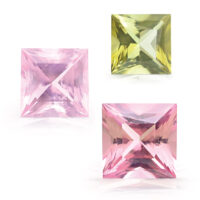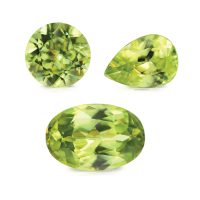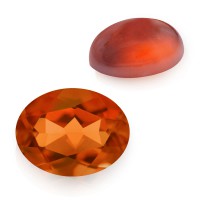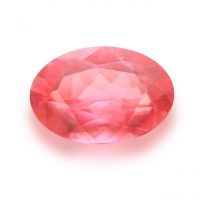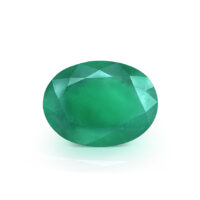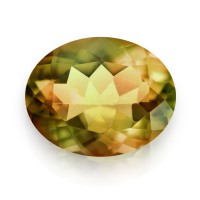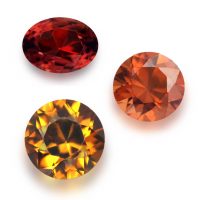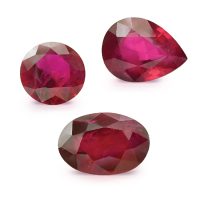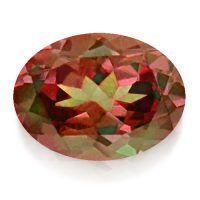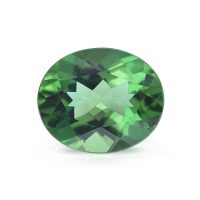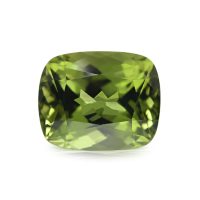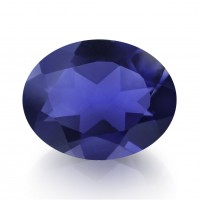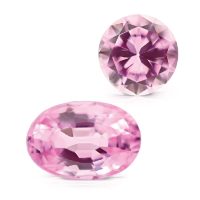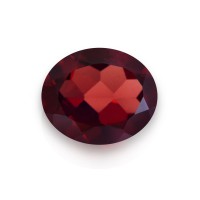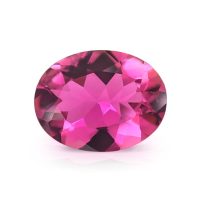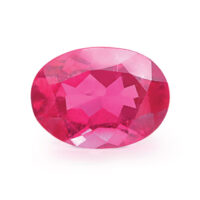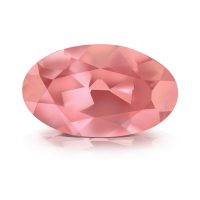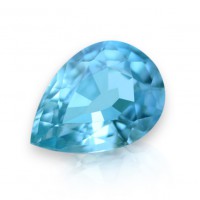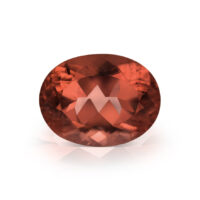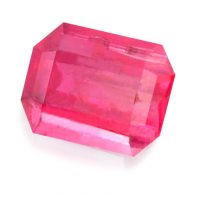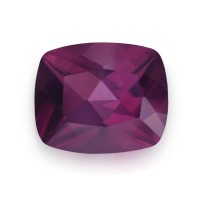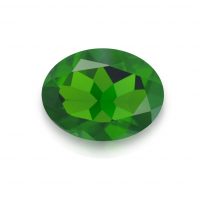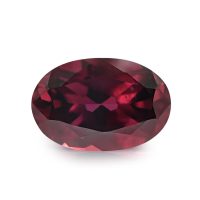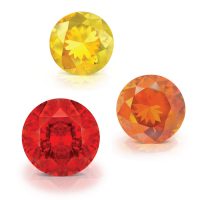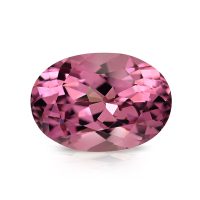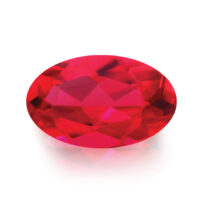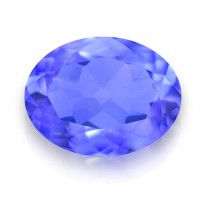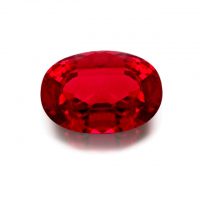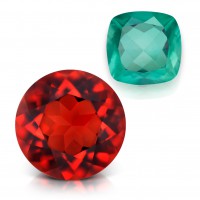
The ‘Big Red’ of Aussie Gems, Australian Red Garnets an extremely rare, all-natural, Almandine, Pyrope & Spessartine fusion, from the Northern Territory’s remote and renowned, Harts Range. Antipodean Garnets usually only industrial, gem-qualities very scarce and virtually unknown… Synonymous with Africa, where it’s called Umbalite or Malaia (Ma-lie-a) Garnet, identifying this beautiful, undeniable rarity Down Under is unanticipated, limited, and highly-collectable. Hand-fossicked around 25 years ago, Australian Red Garnet’s sizzling outback reds, wonderfully combine with an exceptional brilliance, everyday jewelry wearability, and scarcity similar to the coveted Spessartine & Tsavorite!
Hardness 7 – 7.5
Refractive Index 1.760 – 1.765
Relative Density 3.83 – 3.88
Enhancement None
Beauty
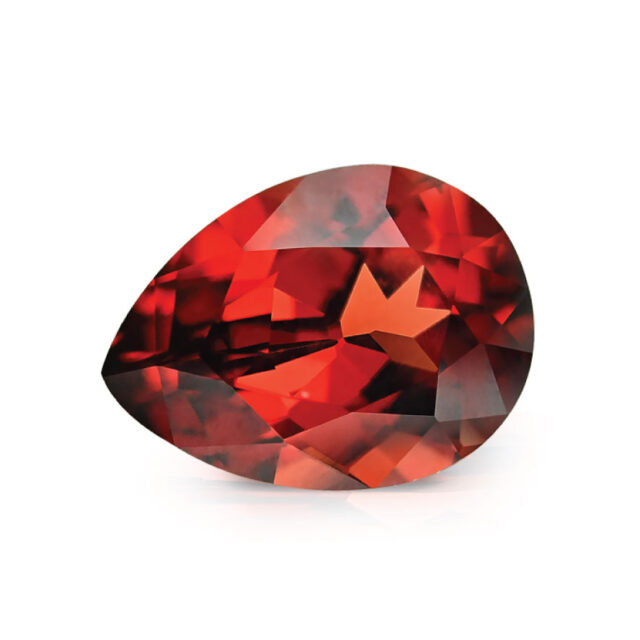
Australian Red Garnet displays gorgeous, intense-reds with fiery-orange flashes (orangish-reds), in a highly-desirable medium saturation (strength of color) and tone (lightness or darkness of color), the marketplace ideal. Rarity aside, the difference between this Garnet, and related Almandine & Pyrope Garnets, are Spessartine traces resulting in brilliant colors, supercharging beauty.
Possessing an excellent brilliance and transparency, deft lapidary accentuating Australian Red Garnet’s innate beauty is essential, with ours optimally faceted in the legendary gemstone country of Thailand (Siam), home to some of the world’s best lapidaries. Each crystal was carefully orientated to maximize its colorful brilliance, maintaining an eye-clean clarity (the highest quality clarity grade for colored gemstones, as determined by the world’s leading gemological laboratories), a high/mirror-like polish (accentuating their vitreous ‘glassy’ luster), and an attractive overall appearance (outline, profile, proportions, and shape). Australian Red Garnets are usually faceted as Ovals, Pears and Rounds to capitalize its beautiful brilliance and yield.
January’s birthstone, Garnets come in blues, chocolates, greens, oranges, pinks, purples, reds and yellows, and are a group of complex aluminum silicate minerals possessing similar crystal structures, but varying in composition, giving each type different colors and properties. Coined by a German bishop, philosopher, theologian and scientist, Albrecht von Bollstadt (c. 1200 – 1280), Garnets’ name is derived from the Latin ‘granatus’ (from ‘granum’, which means ‘seed’) due to some Garnets’ resemblance to pomegranate seeds. Garnet varieties typically used as gemstones include, Almandine, Andradite (Demantoid), Grossular (Hessonite & Tsavorite), Pyrope, and Spessartine, both singly and in combination (e.g. Pyrope-Almandine or Pyrope-Spessartine). Australian Garnet is a very rare Almandine, Pyrope, and Spessartine mix, colored by iron and manganese. Created in 1978 for its first discovery at Tanzania’s famous Umba River Valley, ‘Umbalite’ (i.e. Umba + lite, from the Greek, ‘lithos’, stone) is also called Malaia Garnet (‘outcast’ or ‘out of the family’ in Swahili, the main language of Tanzania), as they don’t match the color/gemological properties of other, better-known Garnets. Umbalites attractive saturations/tones, typically range from red and pink, to reddish-pink, purplish-pink, reddish-purple, and purple, also including, orange-pink, reddish-orange, and orangish-red. Also occurring in igneous rocks (e.g. basalt and granite), Garnets are usually found in metamorphic host-rocks, forming when sedimentary rocks with high aluminum content (e.g. shale) are recrystallized through heat and pressure into new, more stable minerals, such as Garnet. Similar to Sapphire, Garnets durability and weathering resistance, results in secondary eluvial (weathered crystals close to host-rock) and alluvial (weathered crystals moved by water) deposits, including mineralized sands. Used in adornment for over 5,000 years, Garnets were popular in ancient Egypt from around 3100 BC, being used as beads in necklaces, as well as inlaid jewelry (gems set into a surface in a decorative pattern). Garnet’s many myths frequently portray it as a symbol of light, faith, truth, chivalry, loyalty and honesty. In Judaism, a Garnet is said to have illuminated Noah’s Ark, and Garnet (carbuncle) was also one of the gems in the ‘breastplate of judgment’ (Exodus 28:15-30), the impetus for birthstones in Western culture. Crusaders considered Garnet so symbolic of Christ’s sacrifice that they set them into their armor for protection. In Islam, Garnets illuminate the fourth heaven, while for Norsemen, they guide the way to Valhalla. A Grimm’s fairy-tale even tells of an old lady, who upon rescuing an injured bird was rewarded for her kindness with a Garnet that glowed, illuminating the night.
Rarity
Although most gemstones are minerals, not all minerals are gems, with Garnets ranging from its coveted, gemmy transparent crystals, to opaque industrial minerals. While Garnets all-natural beauty, rarity, and durability make ideal jewelry gemstones, they’ve also been used industrially since the Bronze Age. As they’re hard and resistant to heat, radiation and weathering, Garnets have a wide variety of modern applications, including abrasives, filtration, polishing, waterjet cutting, and even rechargeable battery technologies.
Fine, gem-quality Garnet is typically synonymous with Africa, but Australia’s actually the world’s leading mineral Garnet miner, unearthing almost half the global supply. The world’s largest Garnet mine opened in 1983 at Port Gregory in Western Australia, and is currently Australia’s largest source of industrial Garnet, and arguably, also the worlds. With extensive deposits across New South Wales (NSW), Northern Territory, Queensland, and Western Australia, mineral Garnets common in Australian metamorphic rocks, but as with so many antipodean gem-minerals, gem-quality is extremely scarce, sporadic, and very limited. Gemmy, Red Pyrope-Almandine Garnets occasionally occur at many Australian Gem Fields, such as the New England area, as well as elsewhere in NSW, including Bathurst and Orange. Fine Spessartine crystals are found at Broken Hill in NSW, and gem-quality Garnets have been commercially fossicked in Queensland near Mount Tarampa, Mount Wyangapinni, and Proston.
Located approximately 190 kilometers northeast of Alice Springs, the rugged Harts Range in Australia’s Northern Territory’s Central Desert Region is famous for Garnet. Found in metamorphic host-rocks and secondary deposits, including alluvial sands, these are both industrially mined, as well as collected by artisanal miners, fossickers, prospectors, and rock hounds. Since the 1880s, Garnets have been unearthed here, initially with Mica mining, followed by large-scale, industrial Garnet sandmining around 2016. Grossular Garnet (Hessonite), Red Pyrope-Almandine Garnet, Red Malaia Garnet, and Spessartine are found in the Harts Range. Popular Garnet fossicking areas at the Gemtree ‘Garnet Lease’ on Mount Riddock Station, as well as along Plenty Highway, are noted for yielding crystals to the dedicated and lucky!
Exceedingly scarce, Malaia Garnet (Umbalite) mainly borderers northern Tanzania’s Tanga Region and southern Kenya; with much smaller deposits found near Mahenge in the Ulanga District of Tanzania’s Morogoro Region (1993); Sri Lanka (mid-80s); Bekily, Madagascar (late-90s); and Manica, Mozambique (2016). Unearthed at Tanga since the 60s, to find this very rare Garnet in Australia was incredible and totally unexpected. Our Australian Red Garnet was unearthed in the early 2000s, with exceptional mine level value afforded by vertical-integration. Extremely important in today’s gem and jewelry market, nothing is lost to unnecessary middlemen, and provenance is assured. While sparse and erratic, Harts Range Garnets are also widely distributed; found throughout by experienced fossickers, as the area’s often flat with dense undergrowth and labyrinths of tracks, getting lost is easy. Harts Range alluvial Garnets are found by digging, sieving, and washing during the cooler (approximately 3°C – 20°C) winter months (June – August). Beauty and jewelry suitability aside, Malaia Garnets’ currently extremely limited from any origin. Incredibly scarce and not readily available in jewelry, Australian Red Garnet possesses a rarity similar to the coveted Spessartine and Tsavorite. Importantly, Australian Red Garnets are also totally natural and unenhanced, accentuating desirability, rarity, and value. As heat and radiation have little effect on Garnets, they’re seldom enhanced.
Durability & Care
Australian Red Garnet (Mohs’ Hardness: 7 – 7.5) is an excellent choice for everyday jewelry. Australian Red Garnet should always be stored carefully to avoid scuffs and scratches. Clean with gentle soap and lukewarm water, scrubbing behind the gem with a very soft toothbrush as necessary. After cleaning, pat dry with a soft towel or chamois cloth.
Map Location
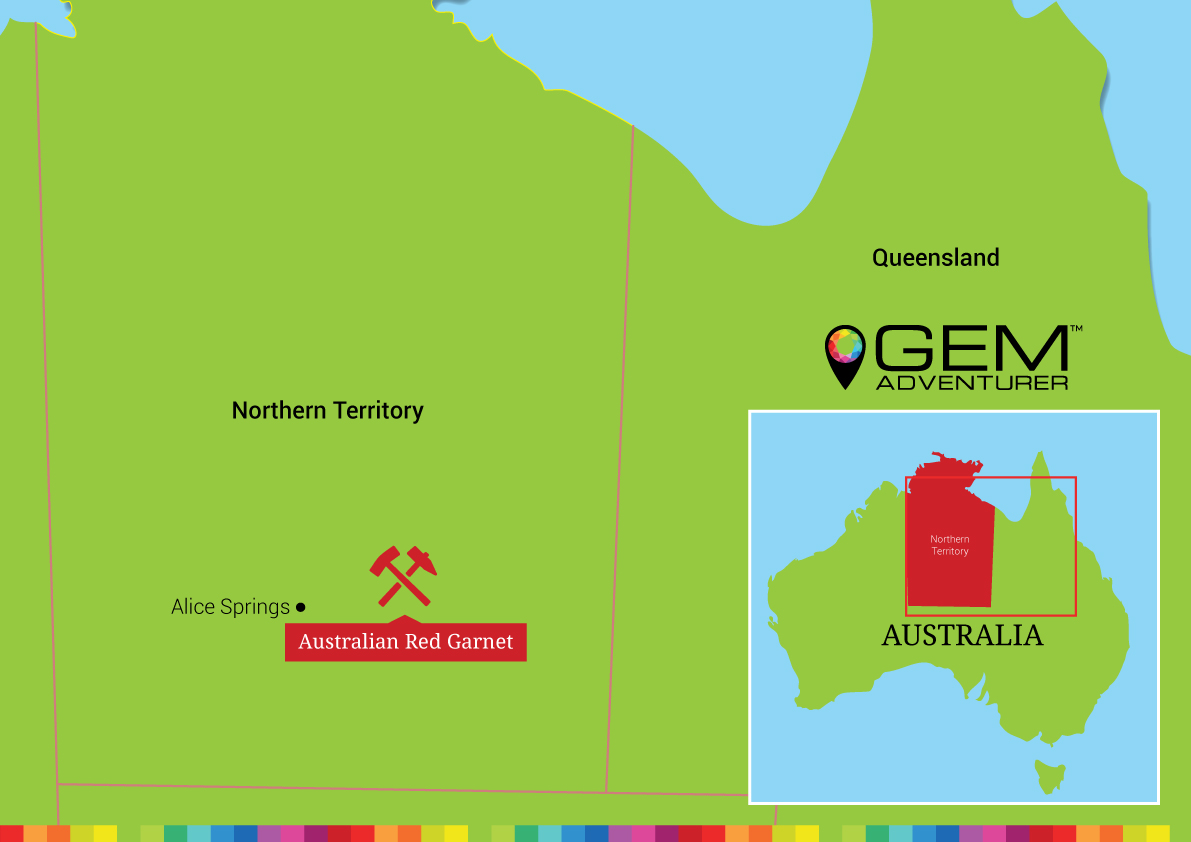
Click map to enlarge