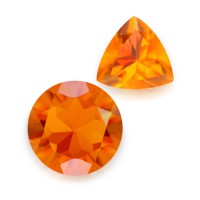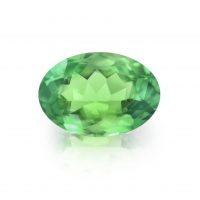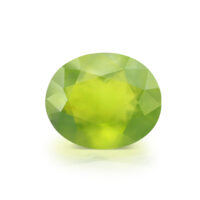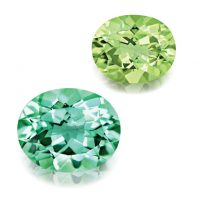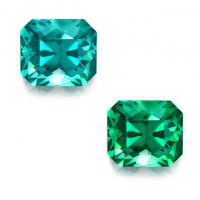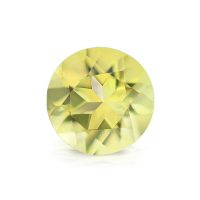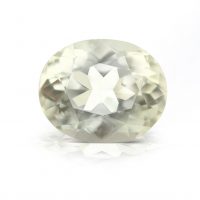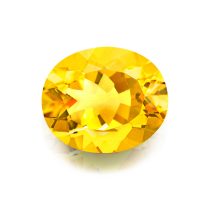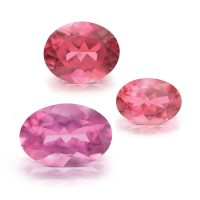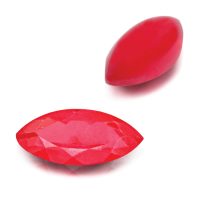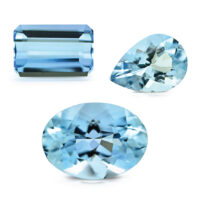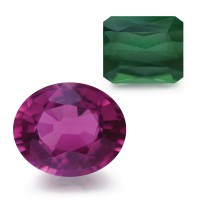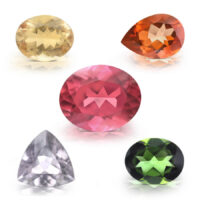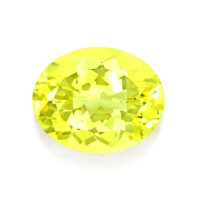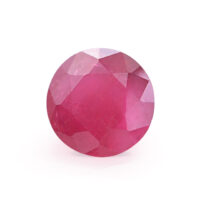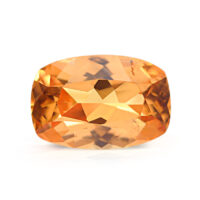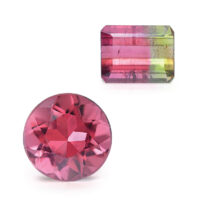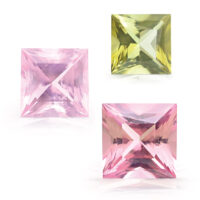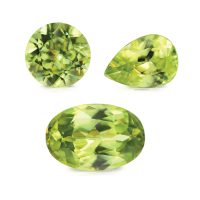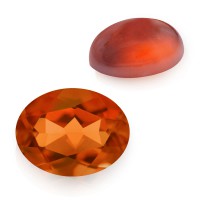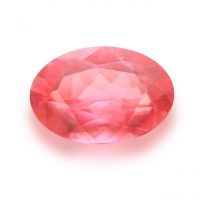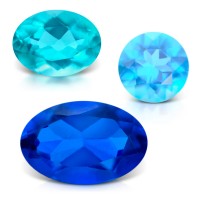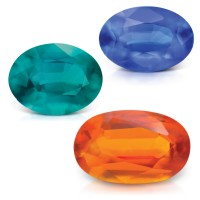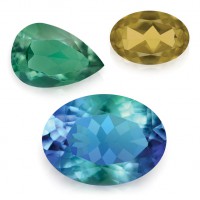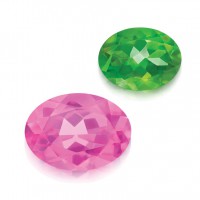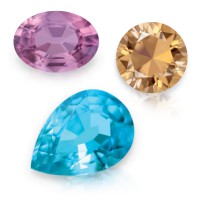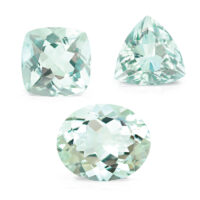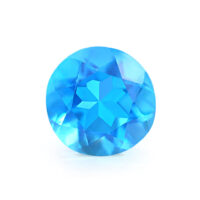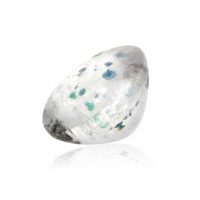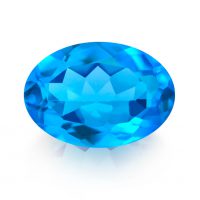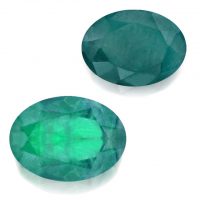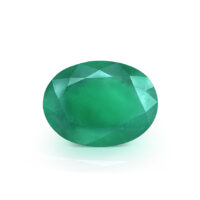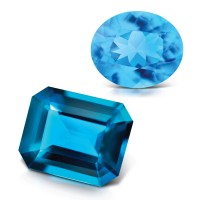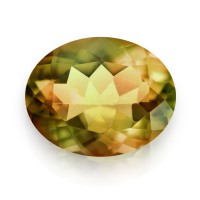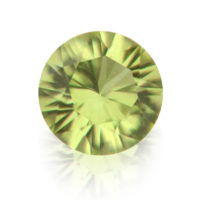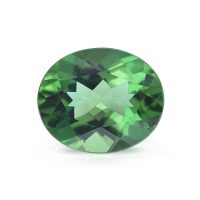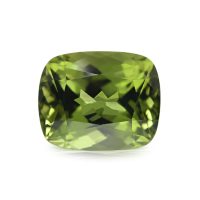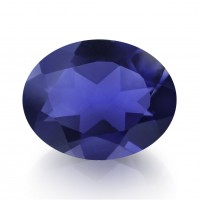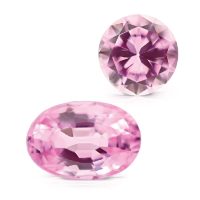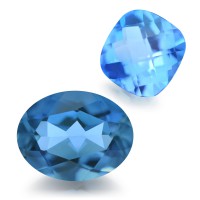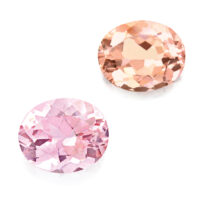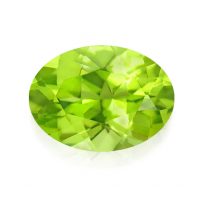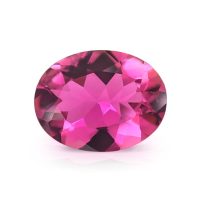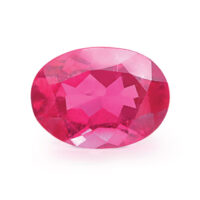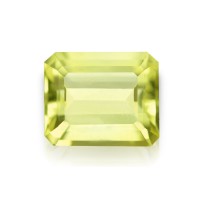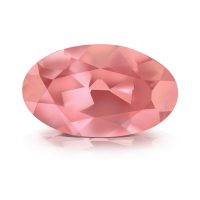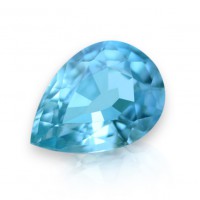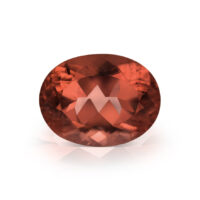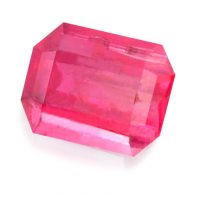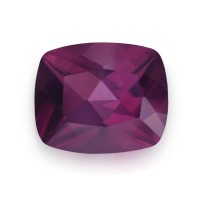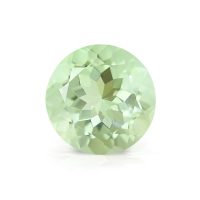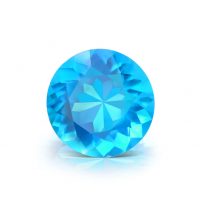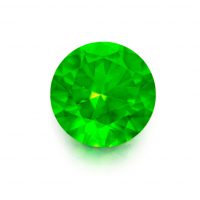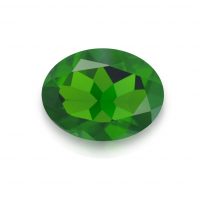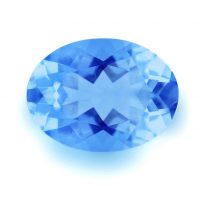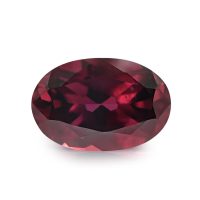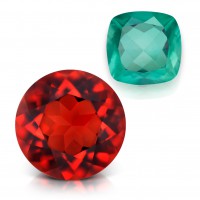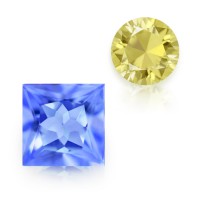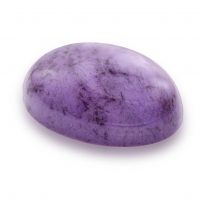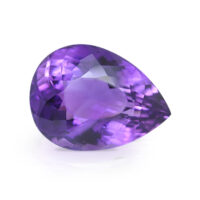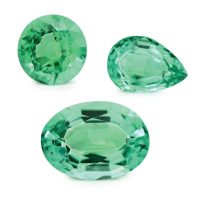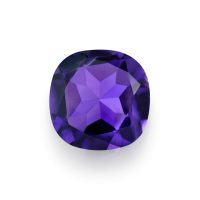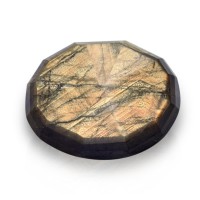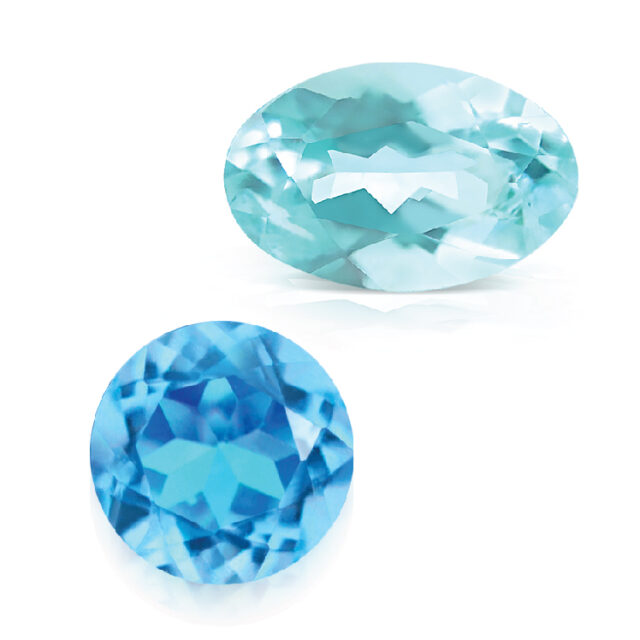
One of October’s birthstones, Tourmalines are among the world’s most colorful and coveted jewelry gems, with fine examples incredibly scarce. A legendary gemstone, Paraíba Tourmaline is the rarest and most valuable Tourmaline, and one of the world’s most exclusive gems. Named for an initial Brazilian discovery almost 40 years ago, its wonderfully wearable neon blues and greens, along with a fine brilliance, redefined gemological beauty. Only found in Brazil (1987), Nigeria (2000) and Mozambique (2001), Paraíba Tourmalines dependent on vaulted historic reserves, making these prized gemstones increasingly difficult to secure.
Hardness 7 - 7.5
Refractive Index 1.618 - 1.646
Relative Density 2.82 - 3.32
Enhancement Standard Heat
Beauty
In a relatively short time, Paraíba Tourmaline not only shifted the perception and appeal of Tourmaline, but also gemological beauty itself. In his book, ‘Gemstones: Quality and Value, Volume 1’, Yasukazu Suwa describes this phenomenon stating, “The appeal of Paraíba Tourmaline far exceeds that of other gems, to the point where they are desired even by people who are accustomed to seeing a variety of gemstones”.
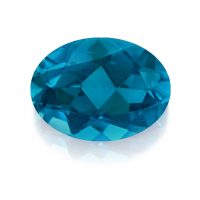
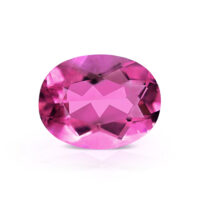
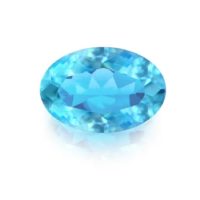
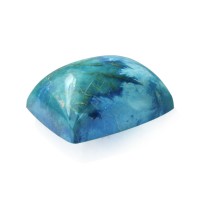
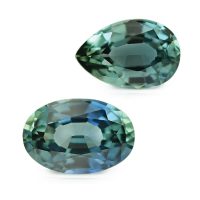
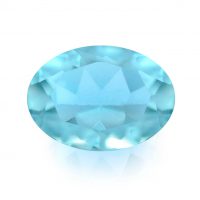
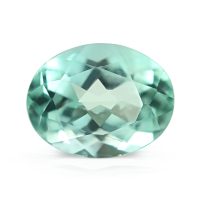
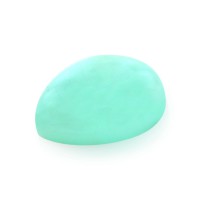
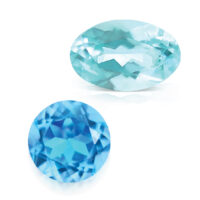
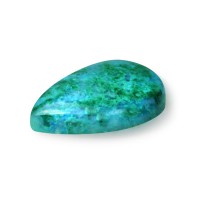
Paraíba Tourmalines main value determinants are, vivid colors with a medium to high saturation (strength of color) and tone (lightness or darkness of color), characterized by a signature electric, fluorescent or neon appearance, with a distinctive transparency affording fine brilliance, and cutting quality. Variously described as Caribbean, electric, peacock, copper-green, neon-aquamarine, swimming pool, or turquoise, gemologically they’re blue, bluish-green to greenish-blue, or green, with higher saturations and tones most desirable. While its neon blues are most expensive, all colors are extremely coveted, with greater neon intensity increasing value. The late Masashi Furuya, former director of the Japan Germany Gemological Laboratory, aptly described Paraíba Tourmaline as, “electric blue brilliance burnt into our minds”. Our Paraíba Tourmalines display its characteristic colors, with its defining medium saturation and tone, the marketplace ideal.
Color’s Paraíba Tourmalines beauty gauge, clarity and size are secondary. Paraíba Tourmaline is a GIA (Gemological Institute of America) Clarity Type III gemstone (typically forms with many inclusions in nature that are usually eye-visible), same as Emeralds. Also, like Emeralds, Paraíba Tourmaline’s visible inclusions are a characteristic trait and totally acceptable, as long as they don’t nullify beauty. All things being equal, cleaner larger Paraíba Tourmalines are worth more simply because of geological scarcity. Our Paraíba Tourmalines are slightly-included (appears fairly clean/minor inclusions visible to the unaided eye) to moderately-included (inclusions may be visible to the unaided eye), exceptional clarities for this rare variety.
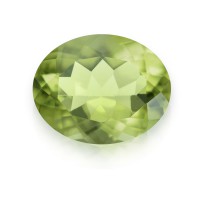
Our Paraíba Tourmalines are optimally-faceted in Brazil at the legendary gem-town of Governador Valadares, and the famed gem-country of Thailand (Siam), both home to some of the world’s best lapidaries. Each crystal was carefully orientated to maximize its colorful brilliance, maintaining a high mirror-like polish accentuating its bright vitreous (glassy) luster, as well as a good overall appearance (outline, profile, proportions, and shape). Dependent on expert cutting, Paraíba Tourmaline is always challenging for the lapidary, not only due to its value, but also because of internal tension areas inside Tourmaline crystals, and its inherent pleochroism (different colors and intensities visible from different directions). While Tourmalines traditionally a ‘day stone’, Paraíba Tourmaline also looks good in low light conditions, due to its essential neon-hues and brilliance.
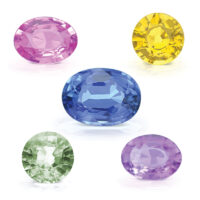
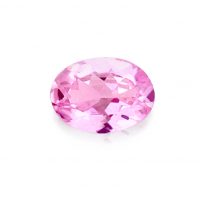
Tourmaline frequently garners the nickname, ‘the chameleon gem’, not only because of its multitude of colors, but also because of its historic propensity to be confused with other gemstones. Tourmaline is derived from the Sinhalese ‘turmali’, which means ‘mixed parcel’ or ‘stone with mixed colors’, and are a group of related minerals whose differences in composition result in a huge color range. While there are 13 mineralogical varieties of Tourmaline, the main type is Elbaite (correctly pronounced, Elba-ite, not El-bite, or El-bait). Named after the island of its discovery (Elba) in Tuscany, Italy, Elbaite is the backbone of Tourmaline gemstones. Tourmaline’s different colors are either identified by a color prefix, such as blue-green, green and pink, or a variety name or prefix. These include, Bicolor Tourmaline (two or more colors), Canary Tourmaline (colored by manganese and historically known as Tsilaisite, Yellow Elbaites from Brazil, Malawi, and Zambia), Cat’s Eye Tourmaline (chatoyant Tourmaline), Color Change Tourmaline (green to red), Chrome Tourmaline (a vivid pure green East African Dravite colored by chromium and vanadium), Cuprian Tourmaline (non-Paraíba hues, but still colored by copper and manganese), Indicolite (blue), Paraíba Tourmaline (blue to green, colored by copper and manganese), Schorl (black), Rubellite (red, strong purplish-red/pink, and slight purplish-red/pink), and Watermelon Tourmaline (pink interior, green exterior, just like the fruit). In 2006, the Laboratory Manual Harmonization Committee (LMHC) decided ‘Paraíba’ can be used for any blue, bluish-green to greenish-blue, or green copper-rich Cuprian Elbaite Tourmaline, with a medium to high saturation and tone, of any origin. This is because Brazilian, Nigerian, and Mozambique Paraíba Tourmalines are often indistinguishable using standard gemological tests, requiring quantitative chemical testing to determine origin.
Rarity
Tremendously popular, Paraíba Tourmaline is the scarcest and most valued Tourmaline, as well as amongst the world’s most expensive gemstones. Tourmaline’s array of colors is typically due to traces of chromium, iron, manganese, and vanadium. Paraíba Tourmaline’s uniquely colored by copper and manganese traces, a distinct composition making it both beautiful and geologically scarce.
Formed in granitic pegmatites (coarsely-grained igneous rocks), Paraíba Tourmaline was discovered in 1987 near the village of São José da Batalha in Paraíba, Brazil by Heitor Dimas Barbosa (1933 – 2023), a ‘garimpeiro’ (small-scale miner) who’d been infatuated by the gem since the early 80s. While Paraíba’s original Batalha Mine, and others at São José da Batalha, were ostensibly exhausted several years after its discovery, limited Brazilian deposits were later unearthed in the neighboring state of Rio Grande do Norte in 1991 (Mulunga Mine) and 1995 (Quintos Mine), and again in Paraíba in 2006 (Glorious Mine). The newer African discoveries, first in Nigeria (Edoukou and Ofiki circa 2000), and then in Mozambique (Mavuco in the esteemed Nampula Province 2001, noting it didn’t significantly appear in the marketplace until 2005), have helped fulfil demand for this esteemed jewelry gemstone. Mavuco’s gems were hidden beneath up to 5 meters of overburden (rock/soil overlying a mineral) in a limited 3-kilometer-square alluvial deposit (weathered crystals moved by water). After artisanal miners’ initial success, there were reportedly three companies operating mechanized/semi-mechanized mines in the Mavuco area. Despite their investments, and a hope that further exploration of the surrounding area would find this alluvial deposit’s primary host-rock, as in Brazil, this was unsuccessful with current mining limited and sporadic. While another alluvial deposit 20-kilometers from Mavuco was later unearthed at Maraca, it’s plagued by inferior clarities.
Brazilian Paraíba Tourmaline continues to demand a heavy premium, and all things being equal, is significantly more expensive than its Mozambique counterpart. This is due to greater rarity, historic origin pedigree, and critically, typically more intense colors.
| ATTRIBUTE & VARIETY | BRAZILIAN PARAÍBA TOURMALINE | MOZAMBIQUE PARAÍBA TOURMALINE |
| PRICE | Fine-quality examples demand over USD150K/carat. | Fine-quality examples demand over USD50K/carat. |
| RARITY | Exceedingly scarce, dwindling supply, due to exhausted mines being ostensibly depleted. | Relatively more abundant; while limited, restricted and sporadic, Paraíba Tourmaline is still being mined in Mozambique. |
| COLOR | Generally, more intense neon blue & green colors, although there are exceptions. | Vibrant colors, sometimes less intense than Brazilian, although there are exceptions. |
| SIZE | Generally, only smaller sizes calibrated, usually with greater intensity. | Generally, relatively larger sizes, but usually with lesser intensity. |
| PEDIGREE | Original ‘Paraíba’ discovery. | Later discovery, less historical premium. |
Our Paraíba Tourmalines are from Brazil’s original deposits at São José da Batalha, as well as Mozambique’s first source near Mavuco village in this country’s north-east. With typical gem mineral returns 20 – 35 percent, Paraíba Tourmaline cutting yields can be a meager 2 percent, which is very low, impacting rarity, availability, and cost. While it once seemed Africa would secure the future of this uniquely beautiful gemstone, Paraíba Tourmaline continues to be challenging to source, with prices reflecting its undeniable beauty, popularity, and scarcity.
Durability & Care
Wonderfully everyday wearable, Paraíba Tourmaline is a durable jewelry gemstone (Mohs’ Hardness: 7 – 7.5). Always store Paraíba Tourmaline carefully to avoid scuffs and scratches. Clean with gentle soap and lukewarm water, scrubbing behind the gem with a very soft toothbrush as necessary. After cleaning, pat dry with a soft towel or chamois cloth.
Map Location


Click maps to enlarge